

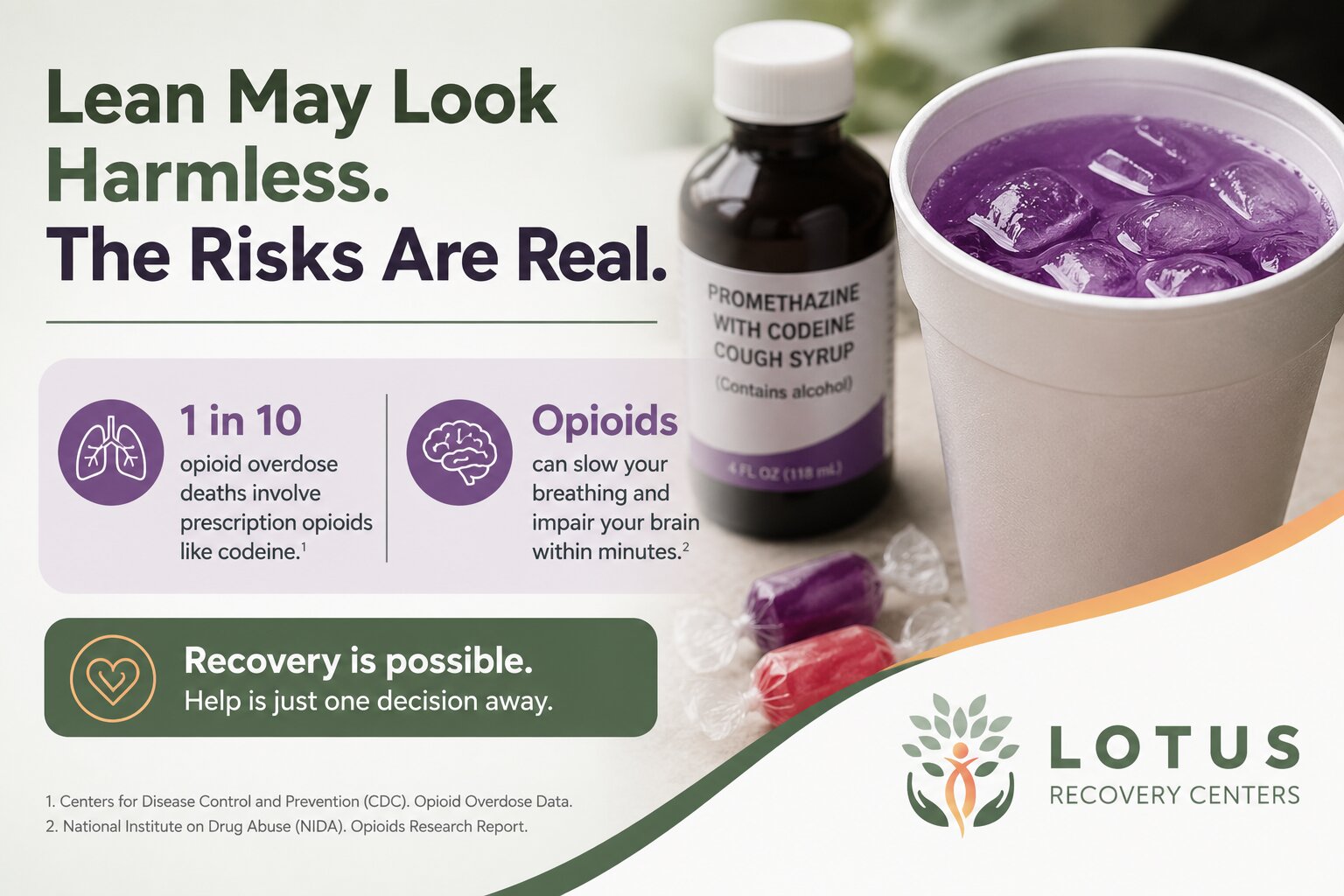
Over the past two decades, lean has become widely recognized through music, social media, and popular culture. It is sometimes portrayed as a relaxing drink or a symbol of a certain lifestyle, leading many people—especially younger individuals—to believe it is less dangerous than other opioids.
That belief can have serious consequences.
If you’ve searched what is lean, it’s important to understand that lean contains an opioid capable of slowing breathing, impairing brain function, causing physical dependence, and increasing the risk of a potentially fatal overdose. While some people view it as a “milder” drug because it begins with prescription medication, misuse can be just as dangerous as misuse of other opioid drugs.
Another concern is that many products sold illegally today are counterfeit. Instead of containing prescription cough syrup, they may contain fentanyl or other unknown substances, making every use unpredictable.
At Lotus Recovery Centers, we believe people deserve clear, medically accurate information about opioid misuse and addiction. If opioid use has become difficult to control, professional opioid addiction treatment can help individuals safely begin recovery before addiction and serious health complications become more severe.
This guide explains what lean is, why it has become popular, the real dangers behind its use, the signs of dependence, and when it may be time to seek professional help.
What Lean (“Purple Drank”) Is
Lean—sometimes called purple drank, sizzurp, or dirty sprite—is a recreational substance traditionally made using prescription cough syrup that contains codeine and promethazine.
Codeine is an opioid medication that is prescribed in some situations to relieve pain or suppress coughing.
Promethazine is an antihistamine that helps treat nausea, allergies, and motion sickness. It also causes significant drowsiness.
When these medications are misused together, they produce sedating effects that some individuals seek recreationally.
Historically, lean has often been mixed with sweet beverages and flavored with candy to change its taste. However, regardless of how it is consumed, the primary concern remains the opioid component—codeine.
It is equally important to recognize that products sold illegally today often differ from the original prescription formulation.
Counterfeit versions may contain:
- Unknown opioids
- Fentanyl
- Other sedatives
- Synthetic drugs
- Unknown contaminants
Because there is no quality control in illegal drug manufacturing, people rarely know exactly what they are consuming.
How Lean Affects the Brain
Codeine belongs to the opioid family of medications.
Once inside the body, it is converted by the liver into morphine.
Morphine attaches to opioid receptors located throughout the brain and nervous system.
These receptors regulate:
- Pain
- Breathing
- Alertness
- Reward
- Mood
- Emotional responses
When activated, they produce:
- Relaxation
- Drowsiness
- Reduced pain
- Feelings of calm
- Mild euphoria
Promethazine enhances many of these effects by further depressing activity in the central nervous system.
Although these sensations may feel pleasant initially, they also slow many essential body functions.
The same mechanisms responsible for relaxation are also responsible for overdose.
Why Lean Became Popular
Lean has received extensive exposure through:
- Music lyrics
- Music videos
- Social media
- Celebrity culture
These portrayals sometimes present lean as:
- Trendy
- Relaxing
- Creative
- Safer than stronger opioids
Unfortunately, these messages rarely explain the medical risks.
Many people incorrectly assume prescription medications are automatically safer than illicit drugs.
While prescription medications can be safe when taken exactly as directed by a healthcare provider, misuse changes that equation completely.
Codeine remains an opioid regardless of how it is consumed.
That means it carries many of the same dangers as other opioid medications.
The Real Dangers of Lean
Many individuals underestimate lean because its effects often develop gradually rather than immediately.
However, serious complications can occur unexpectedly.
Respiratory Depression
The greatest danger is respiratory depression.
Opioids reduce the brain’s drive to breathe.
Breathing becomes:
- Slower
- Shallower
- Less effective
As oxygen levels fall, organs begin receiving less oxygen.
Without prompt medical care, respiratory depression can lead to:
- Brain injury
- Cardiac arrest
- Permanent disability
- Death
This is the leading cause of opioid overdose deaths.
Opioid Overdose
An overdose can occur when someone consumes:
- Too much codeine
- Counterfeit lean containing fentanyl
- Lean together with alcohol
- Lean with benzodiazepines
- Lean with sleeping medications
- Lean with other opioids
Because multiple substances may depress breathing simultaneously, combining drugs dramatically increases overdose risk.
Even experienced opioid users cannot accurately judge the potency of counterfeit products.
Central Nervous System Depression
Both codeine and promethazine slow activity within the brain.
Together they may cause:
- Extreme drowsiness
- Poor concentration
- Slurred speech
- Confusion
- Delayed reaction time
- Poor balance
- Impaired judgment
These effects increase the risk of:
- Car crashes
- Falls
- Workplace accidents
- Poor decision-making
Unknown Ingredients
One of today’s greatest dangers is counterfeit products.
Illegal mixtures sold as lean may contain:
- Fentanyl
- Other synthetic opioids
- Sedatives
- Unknown chemicals
Since users cannot verify the ingredients, every use carries additional uncertainty.
Long-Term Physical Effects
Repeated misuse may contribute to:
- Chronic constipation
- Hormonal changes
- Reduced energy
- Sleep disturbances
- Poor concentration
- Memory difficulties
- Lower motivation
As dependence grows, physical health often declines alongside emotional well-being.
The Risk of Mixing Lean With Other Substances
Many opioid overdoses involve more than one drug.
Combining lean with other depressants greatly increases the risk of respiratory depression.
Particularly dangerous combinations include:
- Alcohol
- Benzodiazepines
- Sleeping medications
- Other opioids
Each additional depressant further slows breathing and increases overdose risk.
Signs of Codeine and Lean Dependence
Dependence rarely develops overnight.
Instead, people often notice subtle changes over time.
Common warning signs include:
- Strong cravings
- Needing larger amounts
- Using more frequently
- Difficulty cutting back
- Spending increasing time obtaining or using lean
- Continuing despite relationship problems
- Declining work or school performance
- Withdrawal symptoms when stopping
Many people continue using simply to avoid withdrawal rather than to achieve euphoria.
Withdrawal Symptoms
When someone dependent on codeine stops using it, withdrawal may develop.
Symptoms often include:
- Muscle aches
- Sweating
- Anxiety
- Restlessness
- Runny nose
- Yawning
- Insomnia
- Nausea
- Diarrhea
- Cravings
Although opioid withdrawal is usually not life-threatening, it can be extremely uncomfortable and often contributes to relapse.
Medical supervision may improve safety and comfort during withdrawal.
Signs of an Opioid Overdose
Call 911 immediately if someone who may have consumed lean experiences:
- Slow breathing
- No breathing
- Blue lips
- Blue fingernails
- Pinpoint pupils
- Difficulty waking
- Unresponsiveness
- Gurgling sounds
- Loss of consciousness
If naloxone is available, administer it according to the product instructions while waiting for emergency responders.
Never assume someone will “sleep it off.”
Why Lean Can Lead to Addiction
Like other opioids, codeine increases dopamine activity within the brain’s reward system.
Repeated exposure changes how the brain responds.
Over time, many individuals develop:
- Tolerance
- Physical dependence
- Cravings
- Compulsive use
- Opioid use disorder
Tolerance means the original amount no longer produces the same effects.
As a result, people often consume larger quantities, increasing overdose risk.
Getting Help Before the Situation Gets Worse
Many individuals struggling with lean misuse hesitate to seek treatment because they compare themselves with people using heroin or fentanyl.
They may believe:
“I don’t have a real opioid problem.”
However, addiction is not defined by the specific drug.
It is defined by the inability to stop despite harmful consequences.
Professional treatment addresses both the physical and psychological aspects of opioid addiction.
Treatment may include:
- Comprehensive assessment
- Medical monitoring
- Individual counseling
- Cognitive behavioral therapy (CBT)
- Group therapy
- Family counseling
- Relapse prevention planning
- Treatment for co-occurring mental health conditions
Seeking help early often improves recovery outcomes and reduces the risk of future overdoses.
Final Thoughts
Lean is often portrayed as a harmless recreational drink, but the reality is that it contains an opioid capable of slowing breathing, impairing judgment, causing physical dependence, and leading to a potentially fatal overdose. The sweet taste, colorful appearance, and cultural popularity do not make it safe.
If you or someone you love is struggling with codeine or other opioid misuse, professional help is available. Contact Lotus Recovery Centers to learn about your recovery options by calling 833.922.1615. Early treatment can help prevent serious health complications and support long-term recovery.
Frequently Asked Questions
What is lean?
Lean is a recreational substance traditionally made from prescription cough syrup containing codeine and promethazine. Because codeine is an opioid, lean carries risks that include addiction, respiratory depression, overdose, and death.
What’s in lean?
Traditionally, lean contains codeine and promethazine cough syrup. However, many products sold illegally today may contain counterfeit ingredients, fentanyl, synthetic opioids, or other unknown substances.
Is lean addictive?
Yes. Codeine is an opioid that can cause tolerance, physical dependence, cravings, and opioid use disorder with repeated misuse.
Why is lean dangerous?
Lean slows the central nervous system and breathing. It can cause impaired judgment, respiratory depression, overdose, and death, especially when combined with alcohol, benzodiazepines, or other opioids.
Can someone overdose on lean?
Yes. Because lean contains an opioid, taking too much or combining it with other depressants can lead to a life-threatening overdose. Signs include slow breathing, blue lips, pinpoint pupils, and unresponsiveness. Call 911 immediately if these symptoms occur.
Does lean always contain codeine?
No. Many products sold illegally as lean are counterfeit and may contain fentanyl or other unknown drugs. This makes their effects highly unpredictable and significantly increases overdose risk.
Can someone become dependent on lean even if they use it occasionally?
Repeated misuse—even if it begins as occasional use—can lead to tolerance and physical dependence over time. The risk varies from person to person, but any nonmedical opioid use carries the potential for addiction.
Can someone recover from lean addiction?
Yes. Many people recover from opioid addiction with evidence-based treatment, counseling, behavioral therapies, relapse prevention planning, and ongoing recovery support. Early intervention often leads to better long-term outcomes.