

Synthetic drugs have changed dramatically over the past two decades. Many are produced in illegal laboratories, sold under misleading names, and manufactured without any quality control. As a result, people often have no way of knowing exactly what they are taking or how powerful it may be.
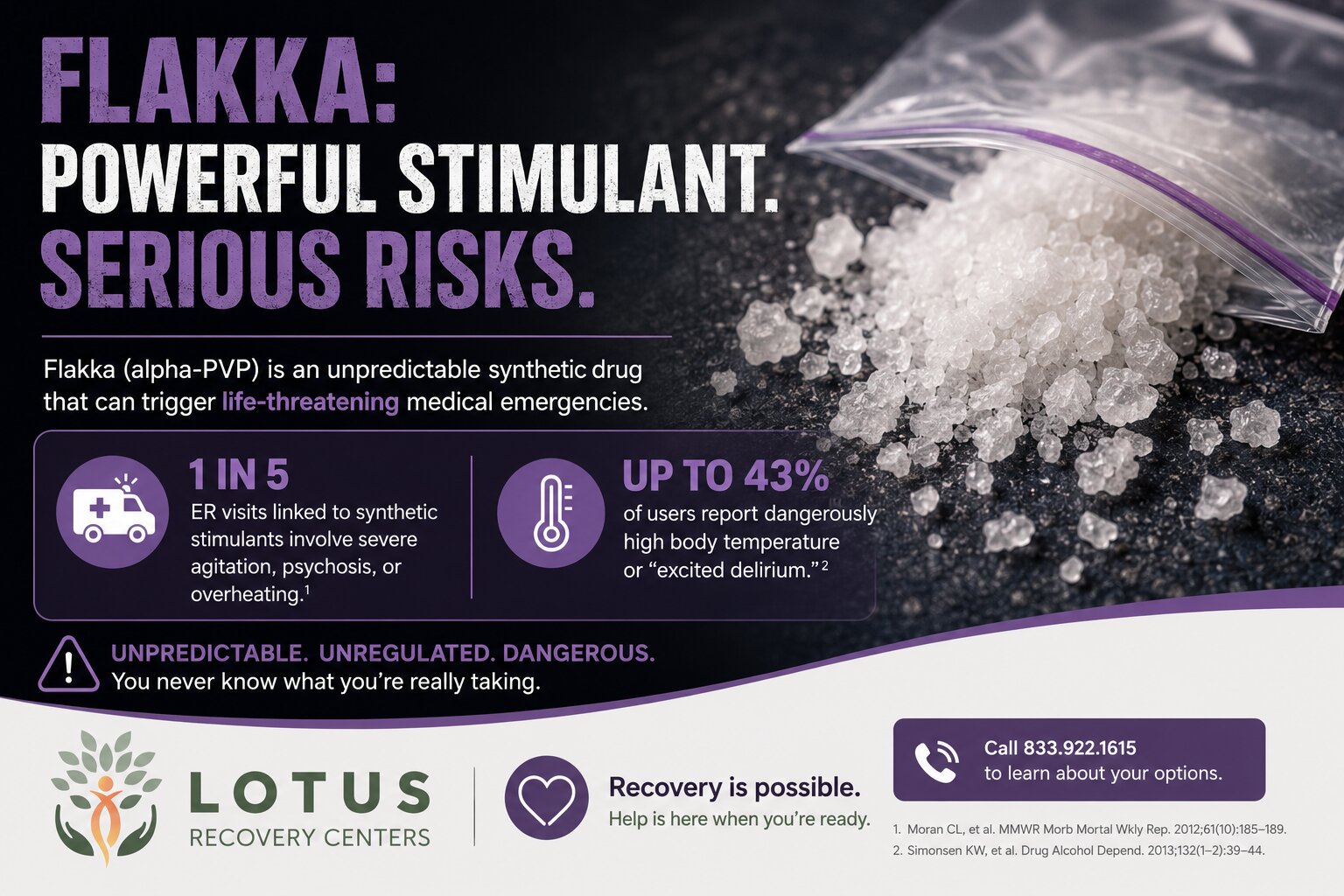
One drug that gained widespread attention is the flakka drug, a synthetic stimulant known for causing severe medical emergencies. News reports often focused on bizarre or violent behavior, but those stories sometimes overshadowed the real issue: flakka is capable of causing life-threatening toxicity that affects the brain, heart, kidneys, and many other organs.
Unlike some stimulants whose effects are relatively predictable, flakka’s potency can vary significantly from one batch to another. Even a small amount may trigger dangerous complications such as hyperthermia, psychosis, seizures, or cardiovascular problems.
At Lotus Recovery Centers, we believe education should be based on medical facts rather than sensational headlines. If stimulant use has become difficult to control, professional drug addiction treatment can help individuals safely begin recovery before serious physical and mental health complications develop.
This guide explains what flakka is, how it affects the body, why it is considered so dangerous, and when it may be time to seek professional help.
What Flakka (Alpha-PVP) Is
Flakka is the street name for alpha-pyrrolidinovalerophenone (alpha-PVP), a synthetic cathinone that acts as a powerful central nervous system stimulant.
Synthetic cathinones are chemically related to cathinone, a naturally occurring stimulant found in the khat plant. However, laboratory-made versions are often far more potent and unpredictable.
Flakka belongs to the same broad family of drugs that have sometimes been marketed illegally as “bath salts,” although not every synthetic cathinone has the same chemical structure or produces identical effects.
Because flakka is manufactured illegally, there is no quality control. Different batches may contain:
- Different concentrations of alpha-PVP
- Other synthetic stimulants
- Unknown chemicals
- Dangerous contaminants
- Fentanyl or other drugs without the user’s knowledge
This unpredictability greatly increases the risk of overdose and severe medical complications.
Flakka has been sold as:
- White powder
- Pink powder
- Crystalline rocks
- Capsules
- Tablets
- Liquid for vaping
People may:
- Swallow it
- Snort it
- Smoke it
- Inject it
- Vape it
Each method allows the drug to enter the bloodstream quickly, although smoking and injecting generally produce faster and more intense effects.
How Flakka Affects the Brain
Flakka primarily increases the activity of dopamine and norepinephrine.
These neurotransmitters help regulate:
- Motivation
- Reward
- Attention
- Alertness
- Heart rate
- Blood pressure
- Stress response
Normally, the brain carefully controls how these chemicals are released and recycled.
Alpha-PVP blocks their normal reuptake, causing dopamine and norepinephrine to remain active much longer than intended.
This overstimulation produces the intense stimulant effects users experience while also placing enormous stress on the body.
Effects of Flakka
The effects vary depending on:
- Dose
- Purity
- Method of use
- Other substances taken
- Individual health
Symptoms may begin within minutes.
Physical Effects
Common physical symptoms include:
- Rapid heartbeat
- High blood pressure
- Increased body temperature
- Heavy sweating
- Dilated pupils
- Tremors
- Restlessness
- Jaw clenching
- Dry mouth
- Reduced appetite
- Insomnia
Some individuals remain awake for many hours or even days.
Sleep deprivation alone can worsen paranoia and hallucinations.
Psychological Effects
Mental and emotional symptoms may include:
- Extreme energy
- Anxiety
- Panic attacks
- Fearfulness
- Suspiciousness
- Irritability
- Racing thoughts
- Impulsive behavior
- Poor judgment
As intoxication worsens, more severe symptoms may develop:
- Hallucinations
- Delusions
- Severe paranoia
- Confusion
- Disorganized thinking
- Aggressive behavior
- Psychosis
Some individuals genuinely believe others are trying to harm them, causing them to flee, hide, or become physically aggressive.
Behavioral Changes
The intense stimulation caused by alpha-PVP may lead to:
- Running without purpose
- Repetitive movements
- Unusual speech
- Inability to remain still
- Poor awareness of surroundings
- Impulsive risk-taking
Although dramatic stories often receive media attention, many people instead experience overwhelming fear, confusion, or panic rather than violence.
Why Flakka Is So Dangerous
Several characteristics make flakka particularly hazardous.
Extremely High Body Temperature (Hyperthermia)
One of the most serious complications is hyperthermia.
As body temperature rises, organs begin to fail.
Without emergency treatment, hyperthermia may cause:
- Brain injury
- Kidney failure
- Liver damage
- Heart complications
- Death
Cooling measures and emergency medical care are often required immediately.
Cardiovascular Stress
Flakka places tremendous strain on the cardiovascular system.
Possible complications include:
- Rapid heart rate
- Dangerous heart rhythms
- Severe hypertension
- Heart attack
- Stroke
- Cardiac arrest
Even young, otherwise healthy individuals have experienced serious heart complications after stimulant use.
Severe Psychosis
Flakka can trigger psychosis that lasts for hours or, in some cases, days.
Symptoms may include:
- Seeing people who are not there
- Hearing voices
- Extreme paranoia
- Delusional beliefs
- Complete loss of contact with reality
Psychosis increases the risk of accidental injury and medical emergencies.
Excited Delirium
Some cases involve a life-threatening condition characterized by:
- Extreme agitation
- Confusion
- Hyperthermia
- Aggression
- Unexpected collapse
This medical emergency requires immediate treatment by emergency personnel.
Muscle Breakdown
Continuous muscle activity combined with overheating may cause rhabdomyolysis.
When muscle tissue breaks down, proteins enter the bloodstream and may severely damage the kidneys.
Without prompt treatment, permanent kidney injury may occur.
Seizures
High doses or severe intoxication may trigger seizures, especially if other stimulants are involved.
Seizures themselves can cause additional injury and require emergency medical care.
The Real Danger vs. the Sensational Headlines
Much of the public first heard about flakka through stories describing “zombie-like” behavior.
While unusual behavior can occur during severe stimulant intoxication, this nickname is misleading.
The greatest danger is not unusual behavior.
The greatest danger is the drug’s effect on vital organs.
Medical professionals are far more concerned about:
- Hyperthermia
- Cardiac arrest
- Stroke
- Organ failure
- Psychosis
- Kidney injury
- Seizures
Sensational labels can distract from the fact that flakka is a powerful synthetic stimulant capable of causing fatal toxicity.
Understanding the science behind the drug helps replace fear with accurate information.
Can Flakka Be Mixed With Other Drugs?
Yes. Illegal drugs are frequently mixed with:
- Methamphetamine
- Cocaine
- MDMA
- Synthetic cathinones
- Fentanyl
- Unknown cutting agents
Someone may believe they are taking one drug while unknowingly consuming several substances at once.
This dramatically increases overdose risk.
Signs of a Flakka Overdose or Medical Emergency
Call 911 immediately if someone develops:
- Extremely high body temperature
- Chest pain
- Severe agitation
- Hallucinations
- Violent behavior
- Difficulty breathing
- Seizures
- Collapse
- Loss of consciousness
- Unresponsiveness
Do not wait for symptoms to improve on their own.
Medical professionals may need to rapidly cool the body, stabilize the heart, manage blood pressure, and treat complications.
Addiction Potential
Like many stimulants, alpha-PVP can strongly activate the brain’s reward system.
Repeated exposure increases the likelihood of developing:
- Psychological dependence
- Intense cravings
- Compulsive drug seeking
- Loss of control
- Increasing tolerance
People often begin taking larger amounts because previous doses no longer produce the same effect.
Unfortunately, higher doses also increase the risk of overdose.
Long-Term Effects of Repeated Flakka Use
Repeated stimulant use may contribute to:
- Persistent anxiety
- Depression
- Chronic paranoia
- Memory problems
- Difficulty concentrating
- Weight loss
- Sleep disorders
- Cardiovascular disease
- Relationship problems
- Financial hardship
- Employment difficulties
Many individuals also experience worsening mental health as stimulant use continues.
Getting Help Before the Situation Gets Worse
Many people who struggle with stimulant addiction initially believe they can stop on their own.
They may quit briefly.
Then cravings return.
Stress increases.
Use resumes.
This cycle becomes increasingly difficult to break without professional support.
Recovery is possible.
Treatment may include:
- Comprehensive assessment
- Medical monitoring
- Individual counseling
- Cognitive behavioral therapy
- Group therapy
- Family support
- Relapse prevention planning
- Treatment for co-occurring mental health conditions
Addressing stimulant use early often leads to better long-term outcomes than waiting until repeated medical emergencies occur.
Final Thoughts
Flakka is one of the most dangerous synthetic stimulants encountered by emergency medical providers. Its unpredictable potency, severe effects on the brain and cardiovascular system, and risk of hyperthermia, psychosis, and organ failure make it far more than simply another recreational drug.
If you or someone you care about is struggling with ongoing stimulant use, professional help is available. Contact Lotus Recovery Centers to learn about your recovery options by calling 833.922.1615. Seeking help early can reduce the risk of future medical emergencies and support lasting recovery.
Frequently Asked Questions
What is flakka?
Flakka is the street name for alpha-pyrrolidinovalerophenone (alpha-PVP), a synthetic cathinone stimulant that affects the brain by increasing dopamine and norepinephrine activity. It is known for causing severe agitation, psychosis, hyperthermia, and cardiovascular complications.
What does flakka do?
Flakka overstimulates the central nervous system. It can increase energy, heart rate, blood pressure, and body temperature while also causing paranoia, hallucinations, confusion, aggression, and impaired judgment.
Is flakka addictive?
Yes. Repeated use can lead to stimulant use disorder, psychological dependence, cravings, tolerance, and compulsive drug use despite harmful consequences.
Why is flakka considered so dangerous?
Flakka is dangerous because its potency is unpredictable and it can cause life-threatening complications including hyperthermia, seizures, heart attack, stroke, kidney failure, psychosis, and cardiac arrest.
Can someone overdose on flakka?
Yes. A flakka overdose is a medical emergency. Symptoms may include extremely high body temperature, seizures, hallucinations, chest pain, collapse, violent agitation, or loss of consciousness. Call 911 immediately if these symptoms occur.
Does flakka always cause violent behavior?
No. While some people experience severe agitation or aggression, many instead develop paranoia, fear, hallucinations, confusion, or psychosis. Sensational media coverage does not reflect every individual’s experience.
How long do the effects of flakka last?
The duration varies depending on the amount used, purity, and whether other substances are involved. Some effects may last several hours, while psychological symptoms such as paranoia or psychosis can persist much longer in certain individuals.
Can someone recover from flakka addiction?
Yes. With evidence-based treatment, counseling, behavioral therapies, and ongoing support, many people recover from stimulant addiction and build healthy, substance-free lives.