

The call came at 11:47 p.m.
Or maybe it wasn’t a call.
Maybe it was a text message from a friend. Maybe you found alcohol in his room. Maybe you noticed the familiar changes in his behavior before anyone said a word.
Whatever the moment looked like, the feeling was probably the same.
Your stomach dropped.
After everything your son went through, after treatment, after the promises, after the hope, you’re suddenly facing a reality you never wanted to see again.
He’s using.
Again.
At Lotus Recovery Centers, we’ve spoken with many families who arrive at this exact moment feeling overwhelmed, exhausted, angry, and terrified all at once.
Some parents immediately blame themselves.
Others become consumed with fear.
Many simply ask:
“What are we supposed to do now?”
If that’s where you are today, we want you to know something important:
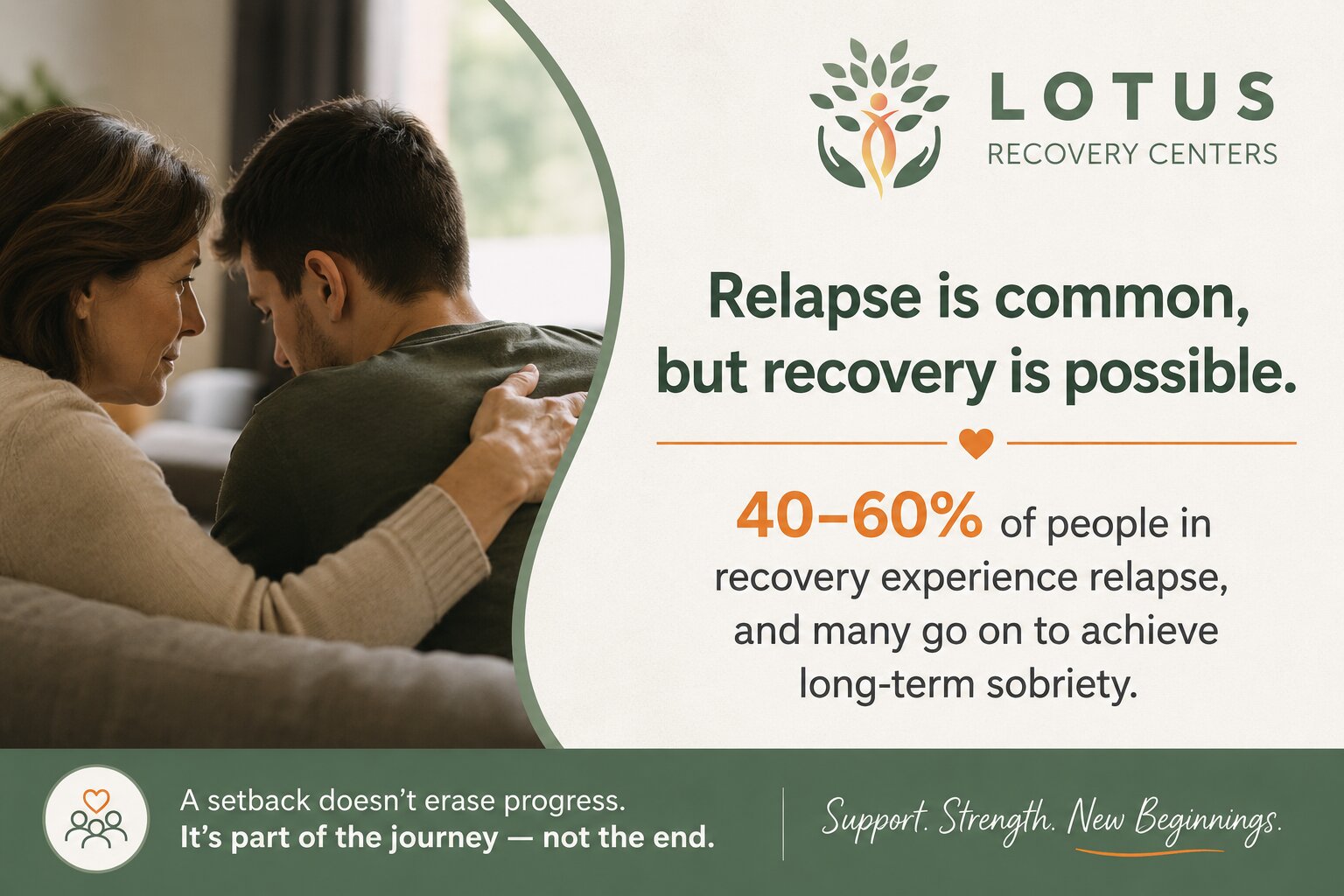
A relapse is serious, but it is not the same thing as failure.
And while it may feel like everything is falling apart, many people recover after setbacks when they receive the right support and take the right next steps.
If you’re exploring options like a structured recovery program because your son left treatment, disengaged from recovery, or started using again, you’re not alone. Many families begin searching for answers during one of the most difficult chapters of the recovery journey.
The First Thing Most Parents Get Wrong
When parents discover a relapse, their minds often race straight to the worst-case scenario.
He’s back where he started.
Treatment didn’t work.
Nothing has changed.
We’ll be dealing with this forever.
Those thoughts are understandable.
But they’re often not true.
One of the biggest misconceptions about recovery is the belief that progress only counts if it happens in a perfectly straight line.
Recovery rarely works that way.
People learn things during treatment.
They develop coping skills.
They gain insight.
They build periods of sobriety.
Even if they return to substance use, those experiences don’t simply disappear.
Imagine someone learning to ride a bike.
If they fall, they haven’t forgotten how to pedal.
They haven’t lost everything they learned.
They’ve experienced a setback.
Recovery is often similar.
The relapse matters.
But what happens next matters even more.
How-To Step #1: Focus on Safety Before Solutions
Many parents immediately begin planning.
Should he go back to rehab?
Should he move out?
Should we intervene?
Should we call someone?
Before making major decisions, focus on safety.
Ask yourself:
- Is he currently intoxicated?
- Is he mixing multiple substances?
- Has there been an overdose concern?
- Is he expressing hopelessness or suicidal thoughts?
- Is his physical health in immediate danger?
If the answer to any of these questions is yes, emergency medical care may be necessary.
If there is no immediate crisis, slow down.
You do not need to solve the next six months tonight.
You only need to determine the safest next step.
Families often feel pressure to create a complete recovery plan within hours.
Recovery rarely works that way.
How-To Step #2: Resist the Urge to Become a Detective
The natural instinct for many parents is investigation.
Questions start coming rapidly.
How long has this been happening?
Who were you with?
How much did you use?
Were you lying to us?
When did this start?
The problem is that people who feel interrogated often become defensive.
And defensiveness usually leads to less honesty, not more.
Instead, focus on connection.
You might say:
“We’re concerned.”
“We love you.”
“We want to understand what’s going on.”
“We don’t have to solve everything tonight.”
That last sentence can be incredibly powerful.
Many people become more willing to talk when they don’t feel cornered.
How-To Step #3: Look Beyond the Substance Use
One mistake families often make is focusing entirely on the relapse itself.
The alcohol.
The drugs.
The event.
But relapse usually begins long before substances are used again.
In many cases, the emotional relapse starts weeks earlier.
Perhaps your son stopped attending support meetings.
Maybe he became isolated.
Maybe depression returned.
Maybe anxiety became overwhelming.
Maybe he stopped talking about recovery altogether.
The substance use is often the final chapter of a longer story.
Understanding what happened beforehand can help reveal what kind of support is needed moving forward.
How-To Step #4: Remember That Shame Is Not a Treatment Plan
Many people who relapse already feel terrible about it.
Far worse than their families realize.
They may be carrying:
- Guilt
- Embarrassment
- Fear
- Self-hatred
- Hopelessness
Some people become so ashamed that they avoid treatment because they don’t want to admit they need help again.
As a result, families sometimes unintentionally add more shame to an already painful situation.
Statements like:
“You’ve ruined everything.”
“How could you do this to us?”
“We can’t trust anything you say.”
often push people further away from recovery.
Accountability matters.
But accountability works best when paired with support.
A person drowning doesn’t need a lecture about water safety before being thrown a life preserver.
How-To Step #5: Stop Waiting for Motivation
This is one of the biggest traps families encounter.
Everyone waits for motivation.
Your son says he’ll get help when he’s ready.
The family waits for him to become serious.
Weeks pass.
Months pass.
Nothing changes.
The reality is that motivation often follows action.
Not the other way around.
Many people return to treatment feeling discouraged and resistant.
They don’t arrive excited.
They arrive exhausted.
Then, over time, hope begins returning.
Waiting for perfect readiness can sometimes become another form of avoidance.
Why Leaving Treatment Early Doesn’t Mean Recovery Is Over
Some parents reading this may be dealing with another layer of frustration.
Their son didn’t complete treatment.
Maybe he left early.
Maybe he stopped attending sessions.
Maybe he disappeared from care entirely.
This situation can feel particularly discouraging.
However, we’ve seen many individuals reconnect with recovery after stepping away.
Sometimes people need time to understand the seriousness of their situation.
Sometimes they leave because they believe they no longer need help.
Sometimes fear takes over.
The important thing to remember is that today’s decisions do not permanently determine tomorrow’s outcome.
People return.
People restart.
People recover.
Even after walking away.
How-To Step #6: Consider Whether More Structure Is Needed
One of the most common patterns we see is this:
Someone completes treatment.
They feel strong.
They return home.
Then real life arrives.
Work stress.
Relationship problems.
Financial pressure.
Boredom.
Loneliness.
Triggers they haven’t encountered in months.
Recovery suddenly has to compete with everyday life.
This is often when additional support becomes valuable.
For some individuals, ongoing multi-day weekly treatment provides accountability, peer connection, counseling, and structure while allowing them to continue living at home.
The goal isn’t to punish someone for relapsing.
The goal is to increase support during a vulnerable period.
How-To Step #7: Create Boundaries That Support Recovery
Parents often struggle with boundaries because they fear appearing unsupportive.
Healthy boundaries are not punishments.
They are guidelines that protect everyone involved.
Examples might include:
- Refusing to provide money that could support substance use
- Requiring honesty about treatment participation
- Setting expectations regarding living arrangements
- Protecting younger siblings from unsafe situations
Boundaries communicate an important message:
“We care about you, and we care about ourselves too.”
Recovery thrives in environments where accountability and compassion coexist.
What Families Often Forget About Their Own Recovery
When a son relapses, most parents focus entirely on him.
His treatment.
His future.
His choices.
Meanwhile, their own stress, anxiety, and exhaustion continue building.
Parents frequently neglect their own needs.
They lose sleep.
They stop engaging in hobbies.
They isolate.
They become consumed by monitoring someone else’s recovery.
This is understandable.
But it isn’t sustainable.
Supporting someone through addiction is a marathon, not a sprint.
You deserve support too.
Whether that comes from counseling, support groups, trusted friends, or family education, taking care of yourself is not selfish.
It’s necessary.
Recovery Is Rarely a Straight Line
One of the most damaging myths about addiction recovery is the belief that success means never struggling again.
Real recovery stories are often messier than that.
People stumble.
They lose momentum.
They make mistakes.
They disappear for a while.
Then they come back.
Sometimes stronger.
Sometimes wiser.
Sometimes finally willing to accept the support they resisted before.
If you’ve been searching for answers about what to do after relapse, remember this:
The relapse itself does not determine the future.
The response to it often does.
Today may feel overwhelming.
Tomorrow may feel uncertain.
But recovery is still possible.
And hope is still justified.
Not because everything is okay.
Because this story is not finished.
Frequently Asked Questions
Is relapse after rehab a sign that treatment failed?
No. Relapse can occur during the recovery process and does not automatically mean treatment was ineffective. Many people learn valuable skills during treatment that help them succeed later.
Should we send our son back to treatment immediately?
The appropriate next step depends on safety concerns, the severity of substance use, mental health factors, and previous treatment experiences. A professional assessment can help determine the right level of care.
What should we avoid saying after a relapse?
Avoid blaming, shaming, or making statements that suggest recovery is impossible. Focus on concern, support, and identifying practical next steps.
What if our son refuses help?
You cannot force recovery, but you can maintain healthy boundaries, communicate concerns clearly, and continue encouraging professional support.
Can someone recover after multiple relapses?
Absolutely. Many individuals who achieve long-term sobriety experienced multiple relapses before finding lasting stability.
Why do people relapse after completing treatment?
Common factors include stress, untreated mental health symptoms, lack of support, overconfidence, isolation, and exposure to triggers after returning home.
How can ongoing treatment help after a relapse?
Ongoing treatment can provide accountability, coping skills, counseling, peer support, and structure that help individuals navigate challenges while continuing their recovery journey.
How can families support recovery without enabling?
Support recovery-focused actions, encourage treatment participation, set healthy boundaries, and avoid shielding substance use from natural consequences.
Call (833)922-1615 or visit our IOP program options to learn more about our programs, iop services in Delaware. For additional resources and treatment options, explore available support in Delaware.