

There’s a certain kind of quiet panic that sets in after you stop showing up.
Maybe it’s been a few days. Or a few weeks. You see a group reminder in your inbox, or a call from someone at the treatment center you didn’t answer. And your stomach sinks.
Then the thoughts come:
“Did I blow it?”
“They probably think I gave up.”
“I can’t go back now… can I?”
If you’ve ghosted treatment—especially a multi-day weekly program like IOP—you are not alone. And more importantly: you are not banned, broken, or beyond welcome.
At Lotus Recovery Centers, the door didn’t close behind you. We don’t do shame here. We do restarts.
Here’s what you need to know about reaching back out—even if it’s been a while, and even if you’re not sure what you’d say.
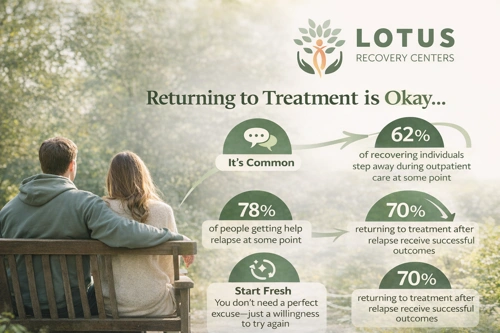
It’s More Common Than You Think
You’d be surprised how many people step away mid-treatment.
Some disappear after a hard session. Some after a rough weekend. Others step back slowly—one missed day, then two, then avoiding the check-in calls altogether.
And nearly all of them assume they’re the only one who’s done it.
But leaving for a while doesn’t mean you weren’t serious. It usually means something got hard—emotionally, practically, logistically—and you didn’t feel like you could keep going at that moment.
That’s not failure. That’s just part of what happens sometimes in recovery. Especially in outpatient settings where real life doesn’t pause.
You Don’t Need a Perfect Story to Come Back
Here’s the truth: most people returning to treatment aren’t sure how to explain why they left.
Maybe you don’t have a clear answer. Maybe it was burnout. Maybe you got triggered and overwhelmed. Maybe a part of you felt like you didn’t belong there. Maybe life pulled you in five different directions and you just… slipped.
You don’t have to have it all figured out.
You can call and say, “I think I need to come back.”
Or even just, “Is it okay if I talk to someone about rejoining?”
That’s enough. Really.
No one is looking for an apology or a full recap. What matters is that you’re thinking about re-engaging now.
Making the Call: What It’s Actually Like
Picking up the phone or writing that first message might feel huge. But the people on the other end? They’re not surprised. And they’re not waiting to grill you.
Here’s what usually happens:
- You’ll speak with someone on the admissions or clinical team.
- They’ll ask your name and if you were in the program before.
- They’ll listen—without judgment—if you want to share why you stepped away.
- They’ll talk through what returning might look like now.
That’s it.
No guilt trip. No lecture. No “Why did you leave us?” interrogation.
Just a real human conversation with people who want to help you feel safe coming back.
You Might Not Have to Start from Scratch
A common fear we hear is: “Do I have to go back to day one?”
The answer? Not necessarily.
If you were making progress before, your treatment team might pick back up where you left off—with a few adjustments based on how you’re doing now. Or they might recommend a re-assessment to better support you this time.
But re-entry isn’t punishment. It’s personalized.
And you’ll be part of that conversation—not handed a “start over” slip.
What Happens If You’ve Been Using Again?
Let’s say you stepped away and your symptoms worsened—or you picked back up with substance use.
Still welcome.
It’s one of the hardest parts to admit, but one of the most normal. Many people who drop out for a while use again. The spiral doesn’t make you unworthy of support. It just means you might need a little more of it right now.
Lotus Recovery Centers isn’t about shame or judgment. If you need to stabilize before jumping back into group work, we’ll talk through those options with you. No blame. Just next steps.
Worried About Seeing People in Group Again?
This part’s real.
Re-entering a group you walked away from can feel awkward. You might think:
- “They’ll think I quit.”
- “They’re ahead of me now.”
- “What if I messed up the vibe?”
But here’s the thing: someone in that room has done the same thing. Left and come back. More than once.
Another person? They’re thinking about ghosting right now.
Your return might be the thing that shows someone else it’s okay to re-engage. That people don’t get written off here.
And honestly? Most folks in group are too focused on their own healing to be judging yours.
Quick Tips for Reaching Back Out
Here’s a low-pressure checklist to help you move from thinking to action:
- You don’t need to apologize. Just reach out.
- Ask for a call or consult to explore options—no commitment needed.
- Share what feels helpful; skip what doesn’t.
- You can take it slow. No rush.
- Still unsure? Just say that. You’ll be met with patience.
Coming Back Isn’t Starting Over—It’s Starting Fresh
There’s a difference.
Starting over sounds like failure. But starting fresh? That’s movement. It means you’re learning from what happened—not being punished for it.
You’re still eligible. You’re still cared for. And you’re still allowed to want more for yourself—even if you paused for a while.
If You’re in Delaware, You’re Closer Than You Think
Whether you live nearby or are just looking for help in Delaware, Lotus Recovery Centers offers flexible support for people exactly where you are.
Returning after disappearing isn’t just allowed—it’s expected sometimes. And we’re built to meet you at that moment.
Frequently Asked Questions About Rejoining IOP
Do I have to explain why I stopped coming?
No. You’re welcome to share what feels helpful, but no explanation is required to rejoin or explore your options. The focus is on where you are now and how we can support you moving forward.
Will I be judged or rejected for leaving?
Absolutely not. Ghosting treatment happens more often than people think, and we don’t treat it as a failure. Our team is trained to respond with compassion—not shame or disappointment.
What if I’ve been using substances again since I left?
That’s okay—and it’s something we can work with. Many people experience a return to use during gaps in care. You’re still welcome here. We’ll talk together about the best level of support for where you are now.
Will I have to restart the entire program?
Not always. Depending on how long it’s been and how things have changed for you, we may be able to pick up where you left off or modify your care plan to meet your current needs. You’ll never be forced to redo things that no longer apply.
Can I just talk to someone before deciding?
Yes. You’re encouraged to call and speak with a member of our admissions or clinical team without any pressure to commit. That first conversation is just about understanding your options.
What if I left on bad terms or didn’t notify anyone?
You’re still welcome to reach out. We understand that leaving can happen in all kinds of ways. The goal is to reconnect—not dwell on what went wrong.
Whenever You’re Ready, We’re Here
You don’t need to have everything figured out. You don’t need to be 100% sure. All you need is a little hope—or even just the willingness to see what’s possible.
Call 833-922-1615 or explore our multi-day weekly treatment options to learn more about our intensive outpatient program services in Delaware.
We’re not keeping score. We’re keeping the light on.