

Sometimes people stop showing up to treatment.
Not because they stopped caring. Not because they didn’t want recovery.
Sometimes life got messy. Sometimes the shame got loud. Sometimes using again felt easier than explaining what happened.
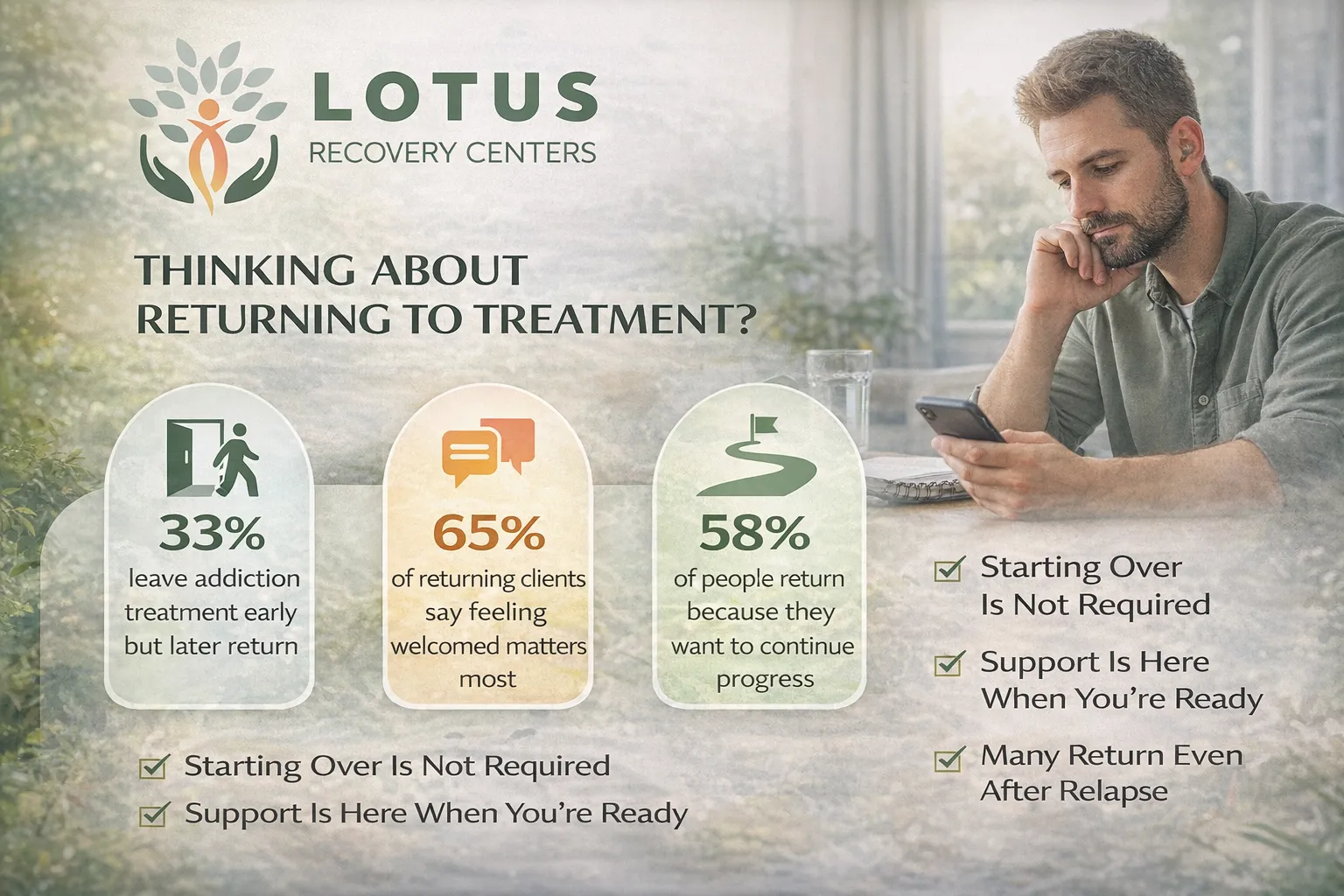
If you left a treatment program and feel unsure about going back, you’re not alone. People pause treatment all the time. Many eventually return to structured care like a multi-day weekly treatment program after stepping away for weeks or even months.
And the return is usually much more welcoming than the mind predicts.
You’re not the only person who disappeared for a while. And you’re definitely not the only person who found their way back.
Start With One Honest Moment
Restarting treatment doesn’t begin with a perfect plan.
It usually begins with one honest moment.
Maybe you send a message that says:
“I stopped coming a few weeks ago and I think I need help again.”
Or maybe you call and say:
“I’m not sure where to start, but I think I should come back.”
That’s enough.
You don’t need a polished explanation. You don’t need a long apology. You don’t need to prove anything first.
Treatment teams know that recovery rarely moves in a straight line. People pause. People struggle. People return.
The door isn’t closed just because you walked away for a while.
Understand That This Happens More Often Than You Think
One of the biggest lies shame tells is that you’re the only one who left.
But in reality, treatment dropout is common.
People stop attending for many reasons:
- Work schedules change
- Family stress increases
- Transportation becomes difficult
- Mental health symptoms spike
- Substance use returns
- Motivation dips
- Fear or embarrassment builds
Sometimes people disappear quietly because they’re afraid someone will be disappointed in them.
But treatment programs see this pattern regularly. Clients step away, regroup, and reconnect later.
Recovery often looks less like a straight path and more like a winding trail.
A pause doesn’t erase the progress you made before.
Expect Some Awkwardness — And Let It Be Okay
Walking back into treatment after disappearing can feel uncomfortable.
You might imagine the moment like showing up late to class after missing several weeks.
Your brain may start running through scenarios:
“They’ll ask where I’ve been.”
“They’ll think I wasted everyone’s time.”
“They probably replaced my spot already.”
But most of the time, the reality is far simpler.
Staff members often greet returning clients with relief rather than frustration. They understand how difficult it can be to walk back through the door.
Peers in group settings usually understand even more.
Many of them have had similar experiences.
Someone might simply say, “Glad you’re back.”
And then the conversation moves forward.
Reach Out Before Things Get Worse
A common pattern happens after someone leaves treatment.
At first, they tell themselves they’ll figure things out on their own.
They might think:
“I’ll come back once I get things under control.”
But addiction and mental health struggles rarely work that way.
Waiting until things become overwhelming again often makes returning feel even harder.
You don’t need to wait for another crisis.
You can reach out when you’re:
- Feeling unstable again
- Using substances more than you planned
- Emotionally overwhelmed
- Struggling to stay motivated
- Feeling isolated
- Thinking about treatment again
Readiness often grows after reconnecting with support.
The first step doesn’t require certainty. It just requires curiosity about what help might look like now.
Ask About Restarting Instead of Starting From Zero
Another fear people have about returning is that everything will restart from the beginning.
They imagine repeating the entire process.
But that isn’t always what happens.
When someone reconnects with a program, staff often review:
- What support helped before
- What challenges caused the pause
- What changes might help this time
- What schedule fits the person’s life now
Sometimes people step back into groups they were previously attending. Sometimes their treatment plan shifts to address new challenges.
Recovery programs are designed to adapt because people’s lives change.
You’re not expected to pretend the pause never happened.
Instead, it becomes part of the story that helps shape the next step.
Remember That Progress Didn’t Disappear
It’s easy to believe that leaving treatment erased everything you learned.
But recovery skills don’t vanish overnight.
Even if substance use returned, many people notice that something feels different after treatment.
Maybe they recognize their patterns faster.
Maybe they notice triggers sooner.
Maybe they catch themselves thinking about coping strategies they learned before.
Recovery often plants seeds that keep growing, even during setbacks.
Coming back to treatment can help those seeds grow stronger instead of starting from nothing.
Let the Shame Move Through You Instead of Stopping You
Shame is one of the most powerful forces that keeps people away from treatment.
It whispers things like:
“You already failed.”
“You should have done this right the first time.”
“They’re probably judging you.”
But shame thrives in silence and distance.
The moment someone reconnects with support, shame usually begins to shrink.
Recovery communities understand something important: setbacks happen.
People relapse. People pause treatment. People struggle with motivation.
And people come back.
The strength isn’t in never stumbling.
The strength is in deciding the story isn’t over yet.
Focus on the Next Step — Not the Entire Journey
Thinking about the entire recovery journey can feel overwhelming.
Instead of asking, “Can I stay sober forever?” try asking a smaller question.
“What’s the next step I can take today?”
That step might be:
- Sending an email to the program
- Making a short phone call
- Asking about rejoining a group
- Scheduling a conversation with a counselor
- Reading about treatment options again
Recovery rebuilds momentum one small step at a time.
Sometimes the biggest breakthrough is simply showing up again.
Give Yourself Permission to Return Without Explaining Everything
Some people worry that they’ll need to explain every detail of what happened while they were gone.
But you don’t have to unpack everything on day one.
You can move at your own pace.
Some people return and simply say:
“I’m back and I want to keep working on this.”
The deeper conversations can come later, when you feel ready.
The most important thing is reconnecting with support.
Everything else can unfold gradually.
Remember That Recovery Is Built on Returning
One of the quiet truths of recovery is this:
Many people succeed because they returned after leaving.
They returned after relapse.
They returned after feeling discouraged.
They returned after believing they had failed.
Recovery is less about perfection and more about persistence.
Each time someone comes back, they bring more experience, more insight, and sometimes more honesty about what they truly need.
The door to recovery rarely closes forever.
Sometimes it just waits for someone to knock again.
FAQs About Restarting Treatment After Leaving
Can I go back to treatment if I stopped attending before?
Yes. Many programs allow clients to return after stepping away. Treatment teams understand that people leave for many reasons, and reconnecting later is common.
If you’re unsure how to restart, reaching out to ask about your options is a good first step.
Will the staff be upset that I left?
Most treatment professionals understand that recovery is complicated. Their goal is usually to help people re-engage with support, not punish them for leaving.
In many cases, staff are simply glad to hear from someone again.
What if I started using again after leaving treatment?
Returning to substance use is a common reason people reconnect with treatment.
Programs are designed to support people at many different stages of recovery. You don’t need to be fully stable before reaching out.
Do I have to repeat the entire program?
Not always. Some people continue where they left off, while others adjust their treatment plan based on current needs.
A conversation with the treatment team usually determines the best next step.
What if I feel embarrassed about going back?
Feeling embarrassed is extremely common.
But many people in treatment programs have experienced similar setbacks. Recovery communities tend to be far more understanding than people expect.
Often the hardest part is simply showing up again.
How long can someone be gone before returning?
This varies by program, but many centers allow people to reconnect even after several months.
The best way to find out is by reaching out and asking what options are available now.
What if I’m not sure I want to fully commit again?
You don’t have to make a long-term commitment right away.
Sometimes the first step is simply talking with a counselor, learning what support looks like now, or attending one session to see how it feels.
Small steps often rebuild motivation over time.
If you’re looking for help in Delaware, support is available when you’re ready — even if you stepped away before.
Call (833)922-1615 or explore our multi-day weekly treatment options in Wilmington, Delaware to learn more.