

You don’t have to hit rock bottom to know something’s off.
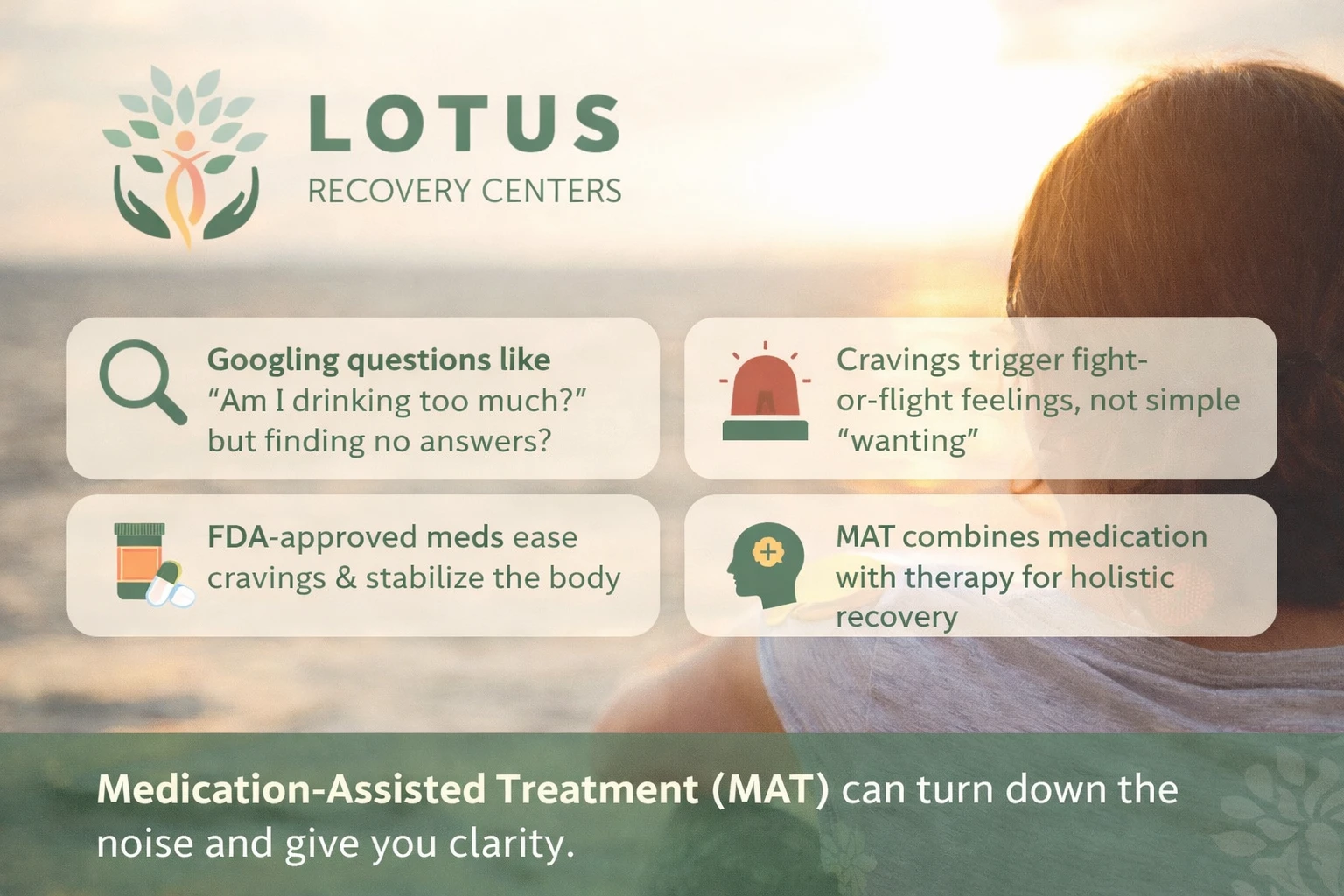
Maybe you’ve started googling phrases like “Am I drinking too much?” or “how to stop using without rehab.” Maybe you’re sober for a few days and then you’re not—and the cycle repeats.
You’re not in chaos. But you’re not at peace either. You wake up with that fog in your brain and the same shame on your shoulders. And somewhere in all that noise is a whisper: “This can’t be it.”
But here’s the thing: most people in your shoes don’t quit because they’re weak. They quit because trying to do it without help is exhausting. That’s where medication-assisted treatment (MAT) comes in.
MAT isn’t about sedation or giving up—it’s about turning down the cravings so you can finally hear your own voice underneath the noise.
Let’s break down how MAT works, what it actually feels like, and why it might be the doorway you’ve been waiting for.
1. Understand What Medication-Assisted Treatment Really Means
Forget what you’ve heard in TV dramas or Reddit threads. Medication-assisted treatment is not about “replacing one drug with another.” It’s about stabilizing your body so your brain has a fighting chance to heal.
MAT combines FDA-approved medications with behavioral therapy and emotional support. You don’t just get a prescription—you get a plan. One that honors both your biology and your story.
Common medications include:
- Suboxone (buprenorphine/naloxone): for opioid cravings
- Vivitrol (naltrexone): for alcohol or opioid use
- Methadone: for severe opioid dependence, in clinic settings
Each medication is paired with real-life support: therapy, group work, case management, and personal space to start feeling again.
2. Cravings Aren’t Just Annoying—They’re Physiological Panic
Here’s a truth most people don’t say out loud: cravings are terrifying.
They don’t feel like a simple want. They feel like your whole body is in fight-or-flight until you give in. They hijack your thoughts. They drown out your goals. And they make everything else—your job, your kids, your self-respect—fade into the background.
Willpower doesn’t fix that. Shame doesn’t either.
But MAT can. By easing the physiological chaos in your nervous system, it gives you a break from the craving cycle. For many people, it’s the first time they feel mentally quiet in years.
3. It’s Not Numbing—It’s Clearing the Static
Think of your brain as a radio. You’ve been trying to tune into yourself, but all you hear is static:
- Guilt
- Fear
- Cravings
- Self-doubt
- Withdrawal symptoms
Medication-assisted treatment helps tune the dial. It doesn’t make everything perfect. But it makes it possible—to reflect, to feel, to plan, to choose.
This clarity isn’t artificial. It’s yours. The meds just help remove the noise that’s been drowning you out.
4. You Stay in Control—Not Sedated
Let’s clear up another myth: MAT does not get you high.
You won’t feel sedated. You won’t be zombified. You’ll feel…normal. Maybe for the first time in a long time.
Most people describe MAT as feeling like they can finally breathe again. Not euphoric. Just functional. Awake. Able to choose instead of react.
That’s the real gift: your agency returns.
5. Your Identity Doesn’t Disappear—It Comes Into Focus
One of the biggest fears for the sober curious is, “What if I get boring? What if sobriety takes something away from me?”
Here’s the secret: it’s not sobriety that takes your spark—it’s the substances that’ve dulled it. The version of you who was creative, funny, driven, curious? They’re still in there. Just buried under fatigue and self-defense.
Medication-assisted treatment isn’t a threat to your identity. It’s a flashlight to help you find it again.
6. There’s No One-Size-Fits-All Timeline
Some people taper off MAT after a few months. Others stay on it longer. You won’t be forced into a 30-day countdown or shamed for needing more time.
At Lotus Recovery Centers, we tailor MAT to your pace—not a textbook timeline.
You’ll have options. You’ll have guidance. But most importantly, you’ll have time to build something real before stepping off the scaffold.
And if you’re close by, we also offer medication-assisted care in Delaware—so you don’t have to leave home to get life-changing support.
7. You Don’t Have to Be Sure—Just Curious Enough to Start
If you’re reading this thinking, “But I don’t know if I want to quit completely,” good news: you don’t have to be sure yet.
Sober curious doesn’t mean sober forever. It means you’re wondering what life could look like. MAT gives you space to ask that question without the constant interruption of cravings and crash cycles.
You don’t need all the answers. You just need enough curiosity to try something different.
What People Say About Their First Weeks on MAT
“I didn’t feel numb—I felt calm. Like I could finally make a decision without fighting myself the whole time.”
— MAT Client, 2023
“I used to wake up panicked. Now I wake up and think about breakfast, not withdrawal. That’s a win.”
— MAT + Outpatient Support Client
“I wasn’t sure I wanted to stop forever. But once the cravings went quiet, I realized I could stop—and that changed everything.”
— Sober Curious Client in IOP
FAQs About Medication-Assisted Treatment
Is MAT safe?
Yes—MAT is evidence-based and approved by the FDA. When prescribed and monitored by medical professionals, it’s both safe and highly effective for treating substance use disorders.
Will I feel high or out of it on MAT?
No. MAT is designed to stabilize your system, not intoxicate it. Most people feel clear-headed and emotionally steady—not numb or altered.
Do I have to be in therapy too?
Yes. Medication alone isn’t a full treatment. MAT at Lotus includes counseling, peer support, and tools to help you address the why, not just the what.
What happens if I want to stop the meds?
You can. When you’re ready, we offer a medically supervised tapering process. You won’t be pushed before you’re prepared—and there’s no shame in staying longer if it helps.
Is this just for opioids?
No. While MAT is well-known for opioid treatment, it’s also used for alcohol use disorder and other substances, depending on your needs and medical profile.
Can I do MAT if I have a job or family responsibilities?
Absolutely. In fact, many clients choose MAT because they can’t step away from life completely. MAT allows you to function in daily life while working on deeper healing.
You’re not weak. You’re not broken. You’re just tired of fighting alone—and there’s a better way.
Call (833)922-1615 to learn more about our medication-assisted treatment services in Wilmington, DE.