

I didn’t stay stuck because I thought nothing would work.
I stayed because I thought it would—and I wouldn’t recognize myself afterward.
That was the trade I believed I had to make.
I Was Protecting Something I Didn’t Know How to Name
It wasn’t obvious at first.
On the surface, it looked like hesitation. Avoidance. Maybe even denial.
But underneath it, there was something more specific:
I was trying to protect the part of me that felt alive.
The part that:
- Thought differently than everyone else
- Felt emotions in full color, not muted tones
- Could turn a moment into something meaningful, something expressive
I didn’t want to lose that.
And every time I thought about getting help, it felt like I was being asked to hand that part over.
Not temporarily. Permanently.
I Thought Stability Meant Becoming Smaller
This was the story I carried for a long time:
That stability meant:
- Less intensity
- Less creativity
- Less personality
Like I’d become some quieter, flatter version of myself.
Predictable. Controlled. Safe in a way that felt… dull.
And maybe you’ve had that same thought.
That if things get better, they’ll also get less interesting.
That you’ll stop being you in the ways that matter most.
So instead of risking that, I stayed where I was—even when it was exhausting.
The Version of Me I Was Defending Was Also Draining Me
Here’s the part I didn’t want to admit.
The version of me I was protecting?
It came with a cost.
A heavy one.
It looked like:
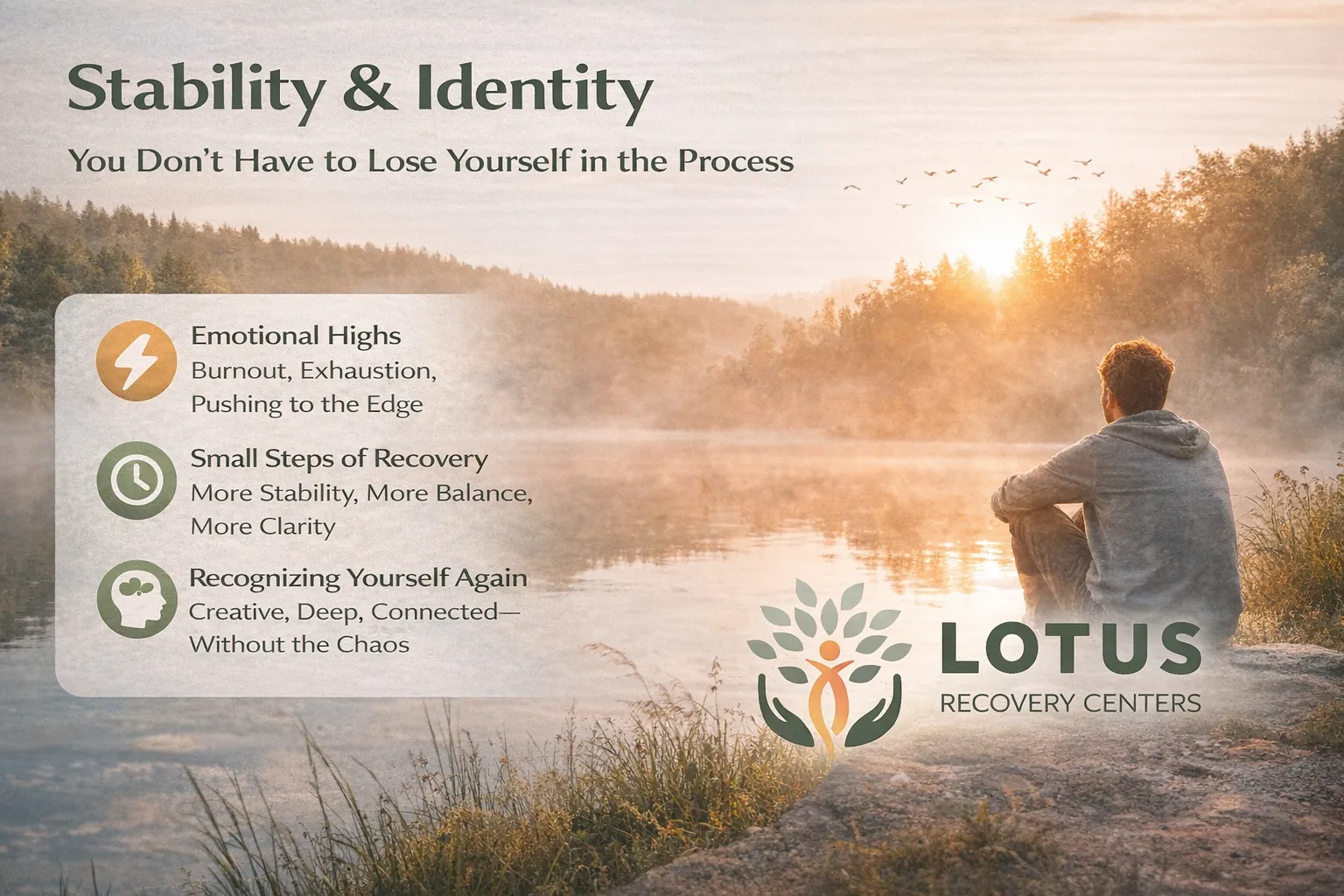
- Emotional highs that felt incredible—and crashes that followed just as hard
- Creative bursts that left me completely depleted afterward
- A constant sense that I had to push myself to the edge just to feel something real
I told myself that was the price of being “deep.”
That if I wanted to feel and create the way I did, I had to accept the chaos that came with it.
But over time, that started to feel less like identity… and more like survival.
The Moment I Almost Walked Away From Help
I remember the exact feeling.
Sitting there, staring at a page about medication-supported recovery options, and thinking:
“This is where I lose everything.”
It wasn’t dramatic.
Just quiet resistance.
Like closing a door before it had the chance to change anything.
Because if I didn’t try, I wouldn’t have to risk finding out I was right.
That I’d come out different in a way I couldn’t undo.
What Actually Changed Was Subtle — And That’s What Made It Work
There wasn’t a moment where everything flipped.
No overnight transformation. No sudden shift in personality.
Just small, almost unnoticeable changes.
At first, it was things like:
- Being able to pause before reacting
- Feeling something without it immediately taking over everything else
- Having a thought and staying with it—without spiraling
It didn’t feel like I was losing anything.
It felt like things were… settling.
Like noise turning down just enough for me to hear myself think.
I Didn’t Lose My Edge — I Lost the Exhaustion That Came With It
This was the part that surprised me most.
I expected to feel less.
Less creative. Less emotional. Less sharp.
But what actually happened was different.
I still felt things deeply.
I still had ideas.
I still connected with people in the same intense, real way.
But I wasn’t constantly recovering from it anymore.
I didn’t have to:
- Burn out to access creativity
- Push myself to extremes to feel something meaningful
- Collapse after moments that used to define me
The “edge” didn’t disappear.
The cost did.
The Creativity Was Always Mine — Not the Chaos
This took time to understand.
Because for so long, I had tied the two together.
I thought:
No chaos = no creativity.
But that wasn’t true.
The creativity didn’t come from the instability.
It came through me.
And once things started to steady, something unexpected happened:
I could return to it.
Again and again.
Without needing to break myself to get there.
I Started Recognizing Myself in a Different Way
At some point, there was a quiet realization.
Not a big moment. Just a shift in awareness.
I was still me.
Same thoughts.
Same emotional depth.
Same way of seeing things.
But now:
- I could choose what to do with it
- I could stay present longer
- I didn’t feel like I was constantly trying to keep up with my own mind
It wasn’t a new identity.
It was a clearer version of the one I already had.
The Fear Didn’t Disappear — It Just Got Proven Wrong
Even after starting, the fear didn’t vanish overnight.
There were still moments where I wondered:
“Is this the part where I change too much?”
But every time I checked in with myself, the answer was the same.
I was still here.
Not smaller. Not flatter.
Just less overwhelmed.
And over time, that fear started to loosen its grip.
Not because someone convinced me.
But because I experienced something different.
You Don’t Have to Trade Yourself for Stability
If you’re reading this, you might be holding the same tension I was.
Wanting things to feel better…
But not at the cost of losing yourself.
That’s valid.
And it’s something a lot of people don’t talk about.
Because from the outside, it can look like resistance.
But from the inside, it’s protection.
You’re trying to hold onto something that matters to you.
You Can Be Curious Without Deciding Everything
You don’t have to figure this out all at once.
You don’t need to commit to a full change.
You can start smaller than that.
You can:
- Ask questions
- Look into options
- See what feels different than what you expected
If you want to explore that without pressure, you can look into treatment options in Delaware.
Just information. Nothing more.
The Version of You You’re Protecting Isn’t Fragile
It might feel like it is.
Like one wrong step and it’s gone.
But it’s not.
Your creativity.
Your emotional depth.
Your way of thinking.
Those aren’t things that disappear because you get support.
If anything, they become easier to access—because you’re not fighting through so much noise to get there.
FAQs — The Questions I Didn’t Know How to Ask
Will I lose the part of me that feels things deeply?
No. You’ll still feel deeply—but without it overwhelming everything else. It becomes something you can experience, not something that controls you.
What if my creativity is tied to how I live right now?
It can feel that way. But many people find their creativity becomes more consistent and sustainable when it’s not tied to extremes.
Will I feel numb or disconnected from myself?
That fear is common. What most people experience instead is more stability—not numbness. You still feel, just without the same intensity swings.
What if I don’t like who I become?
You’re not becoming someone else. You’re creating space to experience yourself more clearly. It may feel unfamiliar at first, but not in a way that erases you.
Do I have to give up everything at once?
No. This isn’t all-or-nothing. You can take small steps, explore options, and move at a pace that feels manageable.
What if I’m not ready yet?
That’s okay. You don’t have to be fully ready. Even being curious is a step.
Can I really have both—stability and creativity?
Yes. And for many people, that’s when creativity actually deepens—because it’s no longer tied to burnout or chaos.
I Didn’t Become Someone Else — I Became More Myself
If I could go back and tell myself one thing, it would be this:
You’re not going to lose who you are.
You’re going to stop losing yourself.
And there’s a difference.
You Can Stay You — And Still Feel Better
You don’t have to disappear to change.
You don’t have to shrink to find stability.
You don’t have to trade your identity for support.
Call (833)922-1615 or visit our medication assisted treatment in Wilmington, Delaware to learn more about.