
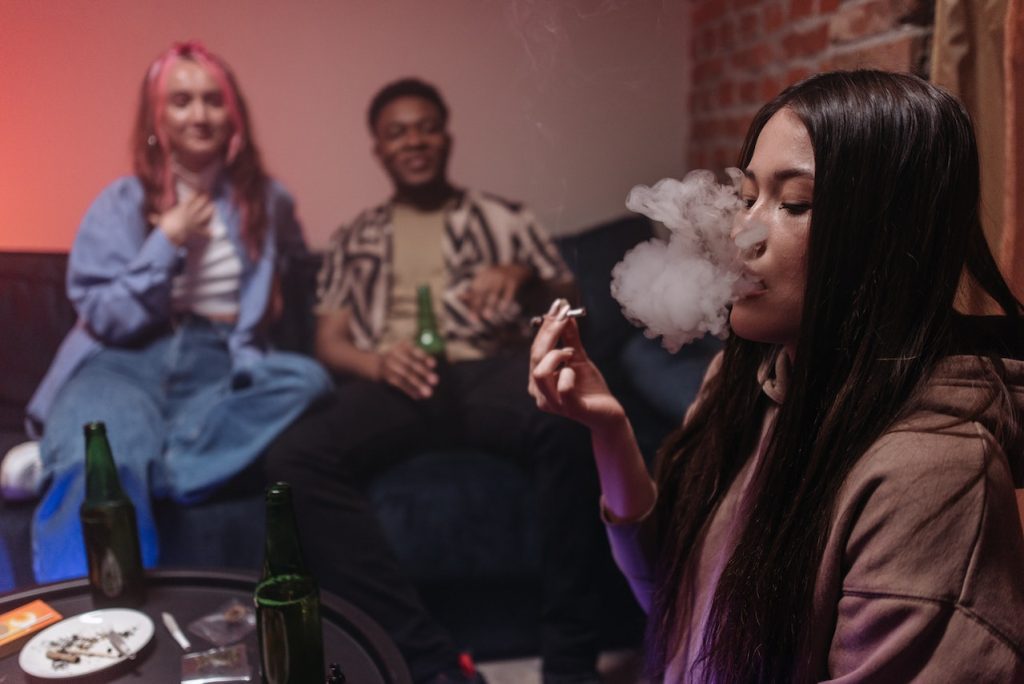
“California sober” describes an approach to recovery that falls somewhere between substance use and complete abstinence. People usually avoid alcohol, opioids, cocaine, and other drugs while continuing to use cannabis. Some people also include psychedelics, although there is no standard definition. The phrase gained widespread attention after Demi Lovato discussed this approach in 2021. Since then, more people have questioned what California sober means and whether it supports lasting recovery. For anyone reconsidering their substance use, professional treatment programs can offer guidance based on individual needs rather than a loosely defined recovery label.
What Does California Sober Actually Mean?
There’s no clinical definition. In practice, people use “California sober” to describe cutting out the substance that caused the most damage, usually alcohol or a hard drug, while continuing to use cannabis, occasionally edibles, sometimes psychedelics like psilocybin. Some people include nicotine or moderate drinking in their version. The lack of a fixed definition is exactly why treatment providers are cautious about it: it’s a personal framework, not a clinical protocol, and it can mean total harm reduction for one person and a loophole for another.
Where the Term Came From
The phrase existed in recovery circles before it went viral, but Demi Lovato’s 2021 YouTube documentary “Dancing with the Devil” brought it into the mainstream. She described using it after a near-fatal overdose in 2018, framing it as a way to stay engaged with life without committing to complete abstinence. She later walked the framework back publicly, saying moderation didn’t work for her long-term. That reversal got less attention than the original claim, but it matters for anyone considering the same approach.
Is It a Legitimate Path to Recovery?
Harm reduction is a legitimate clinical approach, but “California sober” often works differently in practice. Real harm reduction programs use structure, professional oversight, and clear, measurable goals. Examples include syringe service programs and supervised consumption sites. Most people who practice “California sober” don’t have that same structure or clinical guidance. Instead, they decide for themselves which substances to avoid and which ones remain acceptable. That can create problems because addiction can make it difficult to accurately judge whether substance use remains manageable.
The Risk Nobody Talks About
Cannabis isn’t a neutral substance for someone in early recovery from another addiction. It affects the same reward pathways, and for people with substance use disorder, it can function as a bridge back to the substance they’re trying to avoid. Clinicians who work with opioid or alcohol use disorder regularly see cannabis use precede relapse, not because cannabis is uniquely dangerous, but because it keeps the reward-seeking pattern active. A late-night edible turns into a text to an old contact. A “just weed” week turns into a weekend that isn’t.
There’s also a mislabeling risk. Someone who drinks “only on weekends” or uses cocaine “only at parties” can tell themselves that’s California sober too, when what’s actually happening is active addiction with better PR.
Why Full Sobriety Gives You a Better Shot
Medication-assisted treatment exists precisely because willpower-based moderation has a poor track record for opioid and alcohol use disorder. A structured medication-assisted treatment program pairs FDA-approved medication with counseling and monitoring, which gives someone a real physiological and clinical foundation instead of asking them to manage cravings through discipline alone. That’s a fundamentally different bet than hoping moderation holds.
What Real Support Looks Like
At Lotus, treatment starts by identifying which substances are actually driving the problem, not only the one that caused the crisis. For opioid or alcohol use disorder, treatment may combine medication support with individual and group counseling. Care can also change as a person’s needs evolve. The goal isn’t to hand someone a rulebook. It’s to create enough stability that cravings no longer control everyday decisions.
Frequently Asked Questions
Is weed part of being California sober? Usually, yes. Most versions of the concept allow cannabis while excluding alcohol and harder drugs, though there’s no fixed rule.
Can you drink and still be considered California sober? Some people include moderate drinking in their version, but this varies widely and isn’t part of the original concept as Lovato described it.
Does AA support the California sober approach? No. Traditional 12-step programs are built around total abstinence from all mind-altering substances, and California sober directly conflicts with that model.
If Moderation Hasn’t Worked, There’s Another Option
If you’ve tried cutting back on your own and keep ending up back where you started, that’s not a willpower problem. It’s a sign the approach needs to change. Reach out to Lotus Recovery Centers to talk through what a structured treatment plan could look like for your situation.