

When most people hear the words “bath salts,” they picture scented crystals or mineral products added to bathwater for relaxation.
The bath salts drug has nothing to do with those products.
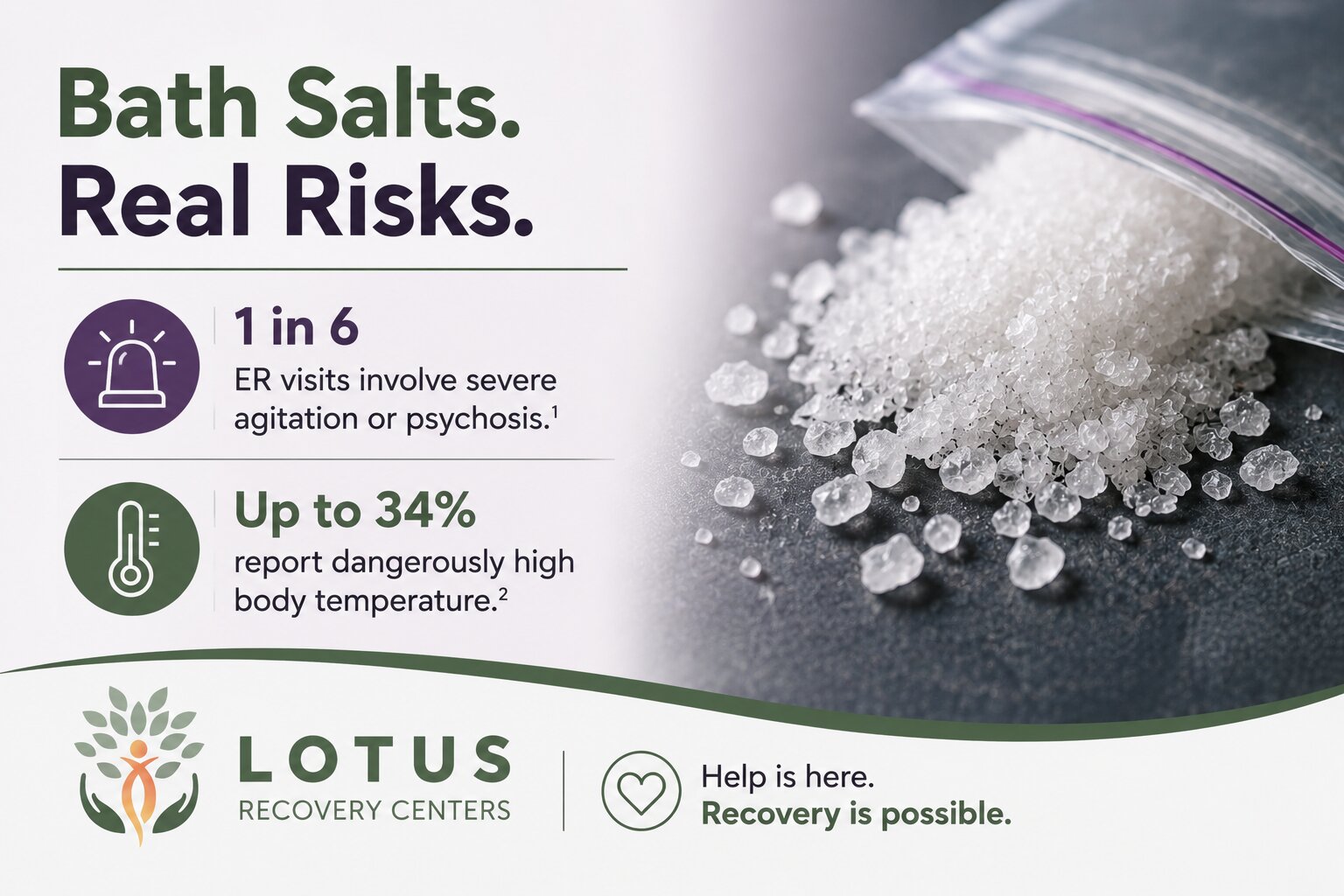
Instead, bath salts are a group of dangerous synthetic stimulant drugs that have been associated with severe medical emergencies, psychosis, dangerously high body temperature, heart problems, and addiction. Although they received significant media attention several years ago, synthetic cathinones continue to circulate in illegal drug markets today, often under different names or mixed with other substances.
One of the greatest concerns is that these drugs are manufactured illegally with no quality control. A person rarely knows exactly what chemical they are taking, how strong it is, or whether it has been mixed with fentanyl or another dangerous substance.
At Lotus Recovery Centers, we believe accurate medical information is more valuable than sensational headlines. Understanding how synthetic stimulants affect the brain and body can help people recognize the risks and know when to seek help. If stimulant use has become difficult to control, professional drug addiction treatment can provide the support needed to begin recovery safely.
This guide explains what bath salts are, how they work, why they are so dangerous, and why they carry a significant risk of addiction.
What Bath Salts (Synthetic Cathinones) Are
Despite their name, illegal bath salts are not bathing products.
The term refers to synthetic cathinones, a group of laboratory-made stimulant drugs designed to mimic the effects of substances such as cocaine, methamphetamine, or MDMA.
Cathinone itself is a naturally occurring stimulant found in the khat plant, which has been used traditionally in parts of East Africa and the Arabian Peninsula. Synthetic cathinones, however, are chemically modified versions that are often much stronger and far less predictable.
Manufacturers continually alter their chemical formulas to create new compounds, making these drugs difficult to regulate and increasing the uncertainty about their effects.
Some of the better-known synthetic cathinones include:
- MDPV
- Mephedrone
- Methylone
- Alpha-PVP (Flakka)
- Alpha-PHP
- Numerous newer synthetic compounds
Because manufacturers frequently change ingredients, two products sold under the same street name may contain completely different chemicals.
Bath salts have been sold under misleading labels such as:
- Bath salts
- Plant food
- Glass cleaner
- Jewelry cleaner
- Research chemicals
These labels are often intended to disguise the true purpose of the product rather than describe its contents.
They may appear as:
- White powder
- Brown powder
- Crystal-like rocks
- Capsules
- Tablets
- Liquids
People may swallow, snort, smoke, inject, or vape synthetic cathinones.
Every method of use carries significant health risks.
How Bath Salts Affect the Brain
Synthetic cathinones act as powerful stimulants by disrupting the brain’s normal communication system.
Specifically, they increase the activity of neurotransmitters such as:
- Dopamine
- Norepinephrine
- Serotonin (with some compounds)
These brain chemicals regulate:
- Pleasure
- Reward
- Alertness
- Mood
- Motivation
- Heart rate
- Blood pressure
- Stress responses
Normally, after these chemicals are released, the brain reabsorbs them to maintain balance.
Bath salts interfere with that process.
As dopamine and norepinephrine continue circulating at abnormally high levels, the brain and body become overstimulated.
This overstimulation is responsible for both the desired stimulant effects and the dangerous medical complications.
Effects of Bath Salts
The effects depend on many factors, including:
- Which synthetic cathinone is present
- Dose
- Purity
- Method of use
- Other substances consumed
- Individual health conditions
Because illegal products vary so much, no one can accurately predict how they will affect a particular person.
Physical Effects
Common physical symptoms include:
- Increased energy
- Rapid heartbeat
- Elevated blood pressure
- Dilated pupils
- Heavy sweating
- Dry mouth
- Tremors
- Muscle tension
- Jaw clenching
- Decreased appetite
- Insomnia
Many individuals remain awake for long periods, sometimes for days, which can worsen psychiatric symptoms.
Psychological Effects
The brain is often affected just as dramatically as the body.
Possible psychological effects include:
- Anxiety
- Panic attacks
- Irritability
- Restlessness
- Racing thoughts
- Suspiciousness
- Mood swings
- Poor judgment
- Impulsive behavior
As intoxication becomes more severe, individuals may develop:
- Hallucinations
- Delusions
- Severe paranoia
- Confusion
- Disorganized thinking
- Psychosis
Someone experiencing stimulant-induced psychosis may genuinely believe people are trying to harm them or that threats exist when none are present.
Behavioral Changes
Behavioral symptoms can include:
- Extreme agitation
- Inability to remain still
- Repetitive movements
- Rapid speech
- Poor awareness of surroundings
- Risk-taking behavior
- Confusion
Although dramatic incidents sometimes receive media attention, many individuals instead experience overwhelming fear, panic, or confusion rather than aggression.
Why Bath Salts Are So Dangerous and Unpredictable
Several characteristics make synthetic cathinones especially hazardous.
No Standard Formula
Unlike prescription medications, bath salts have no standardized ingredients.
One package may contain one synthetic stimulant.
Another may contain several.
Some may include completely different chemicals than advertised.
This makes every purchase unpredictable.
No Quality Control
Illegal drug manufacturers do not follow pharmaceutical safety standards.
Products may contain:
- Unknown chemicals
- Toxic contaminants
- Different concentrations
- Fentanyl
- Other stimulants
Even experienced users cannot know exactly what they are taking.
Unknown Potency
Because concentration varies widely, one dose may seem relatively mild while the next causes life-threatening toxicity.
Small changes in chemical structure can dramatically alter how the drug affects the body.
Hyperthermia
One of the most dangerous complications is hyperthermia.
Body temperature may rise rapidly to dangerous levels.
Without immediate treatment, hyperthermia can cause:
- Brain damage
- Kidney failure
- Liver injury
- Organ failure
- Death
Cooling measures and emergency medical treatment are essential.
Cardiovascular Emergencies
Synthetic cathinones place enormous stress on the cardiovascular system.
Possible complications include:
- Heart attack
- Stroke
- Dangerous heart rhythms
- Extremely high blood pressure
- Cardiac arrest
Even otherwise healthy young adults have experienced serious heart complications.
Excited Delirium
Some individuals develop a life-threatening condition often referred to as excited delirium, characterized by:
- Extreme agitation
- Severe confusion
- Hyperthermia
- Extraordinary physical activity
- Unexpected collapse
This requires immediate emergency medical care.
Seizures
Powerful nervous system stimulation may trigger seizures.
Seizures increase the risk of head injuries, breathing problems, and additional medical complications.
Kidney Damage
Continuous muscle activity combined with overheating may lead to rhabdomyolysis, a condition in which muscle tissue breaks down and damages the kidneys.
Without treatment, permanent kidney injury may occur.
The Real Danger Behind the Headlines
News stories have sometimes focused on unusual or frightening behavior associated with bath salts.
While these reports drew public attention, they did not always explain the medical reasons behind the symptoms.
Healthcare professionals are primarily concerned about:
- Severe stimulant toxicity
- Hyperthermia
- Cardiovascular collapse
- Psychosis
- Organ failure
- Kidney injury
- Seizures
These documented complications—not sensational headlines—are the real reasons synthetic cathinones are considered so dangerous.
Signs of a Medical Emergency
Call 911 immediately if someone who may have used bath salts develops:
- Extremely high body temperature
- Chest pain
- Difficulty breathing
- Hallucinations
- Violent agitation
- Seizures
- Collapse
- Loss of consciousness
- Severe confusion
- Unresponsiveness
Do not attempt to manage severe intoxication at home.
Emergency medical treatment can save lives.
Addiction Potential
Like cocaine and methamphetamine, synthetic cathinones strongly activate the brain’s reward system.
Repeated use may lead to:
- Powerful cravings
- Psychological dependence
- Increasing tolerance
- Loss of control
- Continued use despite serious consequences
As tolerance develops, many individuals begin using larger amounts more frequently.
This greatly increases overdose risk.
Long-Term Effects of Repeated Bath Salts Use
Repeated stimulant use may contribute to:
- Chronic anxiety
- Depression
- Persistent paranoia
- Difficulty concentrating
- Memory problems
- Sleep disturbances
- Weight loss
- Financial problems
- Relationship conflict
- Employment difficulties
Some individuals continue experiencing psychiatric symptoms long after intoxication ends.
Why It Can Be Difficult to Stop
Many people initially believe they can quit whenever they choose.
Over time, however, cravings become stronger while the pleasurable effects become shorter.
People often find themselves using the drug simply to avoid feeling exhausted, depressed, or emotionally flat.
Without treatment, this cycle can become increasingly difficult to break.
Getting Help Before Addiction Progresses
Recovery from stimulant addiction is possible.
Professional treatment helps individuals address both the physical and psychological aspects of substance use.
Depending on individual needs, treatment may include:
- Comprehensive assessment
- Medical monitoring
- Individual counseling
- Cognitive behavioral therapy (CBT)
- Group therapy
- Family counseling
- Relapse prevention planning
- Treatment for co-occurring mental health disorders
Seeking help early may reduce the risk of repeated overdoses, emergency hospitalizations, and long-term health complications.
Final Thoughts
Bath salts are not harmless bath products—they are dangerous synthetic stimulant drugs that can cause severe psychosis, dangerously high body temperature, heart complications, seizures, kidney injury, and potentially fatal medical emergencies. Their constantly changing chemical makeup makes every use unpredictable, even for experienced users.
If you or someone you love is struggling with stimulant or synthetic drug use, professional help is available. Contact Lotus Recovery Centers to learn about your recovery options by calling 833.922.1615. Early treatment can support lasting recovery and help prevent future medical emergencies.
Frequently Asked Questions
What are bath salts?
Bath salts are synthetic cathinones, a group of laboratory-made stimulant drugs that affect the brain and central nervous system. Despite their name, they are completely different from bath products used for relaxation.
What do bath salts do to you?
Bath salts can increase heart rate, blood pressure, body temperature, and energy while also causing anxiety, paranoia, hallucinations, psychosis, aggressive behavior, and dangerously high body temperature.
Are bath salts addictive?
Yes. Synthetic cathinones can produce intense cravings, tolerance, psychological dependence, and compulsive drug use. Repeated use significantly increases the risk of developing a stimulant use disorder.
Why are bath salts so dangerous?
Bath salts are dangerous because their ingredients constantly change, there is no quality control, and users rarely know exactly what they are taking. This unpredictability increases the risk of overdose, psychosis, hyperthermia, seizures, and heart complications.
Can bath salts cause psychosis?
Yes. Synthetic cathinones are well known for causing hallucinations, delusions, severe paranoia, and stimulant-induced psychosis, sometimes requiring hospitalization.
What is excited delirium?
Excited delirium is a life-threatening medical emergency that may involve severe agitation, confusion, hyperthermia, extreme physical activity, and sudden collapse. Anyone showing these symptoms after using bath salts should receive emergency medical care immediately.
Can someone overdose on bath salts?
Yes. An overdose can cause dangerously high body temperature, seizures, chest pain, heart rhythm problems, hallucinations, unconsciousness, or cardiac arrest. Call 911 immediately if these symptoms occur.
Can someone recover from bath salts addiction?
Yes. Many individuals recover with evidence-based treatment, behavioral therapies, counseling, relapse prevention planning, and ongoing recovery support. Early intervention often improves long-term recovery outcomes.