
I remember staring at the ceiling thinking, I could stop… if it didn’t feel like my body was going to revolt against me.
That fear isn’t dramatic—it’s practical. It’s the kind that quietly keeps people stuck.
If you’re here, you’re probably not asking for a speech about recovery.
You just want to know if there’s a way to stop without everything falling apart.
There is. But it’s not about forcing yourself through pain—it’s about understanding what your body and mind actually need.
And if you want a starting point right now, there are options like medication support that helps stabilize the process so you’re not doing this alone or unprotected.
The Fear Isn’t Just About Getting Sick
Let’s be honest for a second.
Yes, withdrawal is scary. The sweating, chills, anxiety, nausea—it’s a lot. But for many people, that’s not even the hardest part.
The deeper fear is quieter:
What if I’m not me without this?
Oxys don’t just numb pain. They can:
- Take the edge off social anxiety
- Make you feel more open, more expressive
- Turn down emotional noise
- Help you feel “on” when you otherwise wouldn’t
So stopping doesn’t just feel like losing a substance—it feels like risking your identity.
That’s not something you just brush off.
Why Your Body Pushes Back So Hard
If you’ve ever tried to stop and felt like your body was fighting you, that wasn’t weakness.
That was adaptation.
Your brain has learned to rely on oxycodone to regulate pain, mood, and even basic comfort. When you take it away suddenly, your system goes into shock trying to rebalance itself.
That’s why people experience:
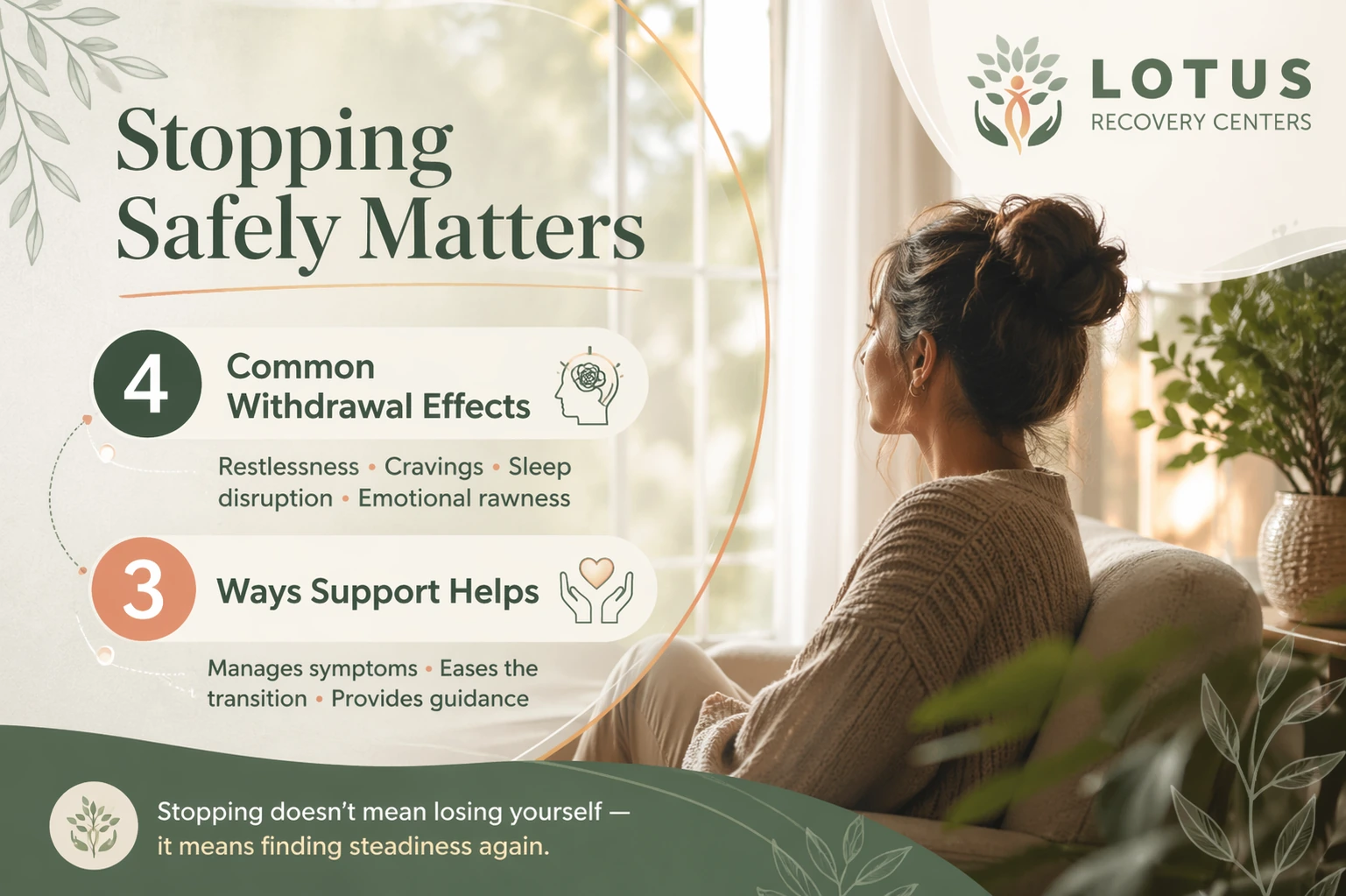
- Restlessness that makes it hard to sit still
- Intense cravings that feel physical, not just mental
- Sleep disruption that stretches for days
- A sense of emotional rawness that feels overwhelming
This is also why so many people start searching for ways to quit oxycodone without withdrawal that don’t involve white-knuckling through the worst of it.
Because the truth is—forcing it isn’t the only option.
The Myth of “Toughing It Out”
There’s this unspoken idea that if you’re serious about stopping, you should just push through the pain.
But that mindset has kept a lot of people stuck in cycles of:
- Trying to quit
- Getting overwhelmed
- Going back to using just to feel normal again
That’s not failure. That’s a system that wasn’t supported.
You don’t have to prove anything by suffering.
There are structured ways to step down—ways that respect what your body is going through instead of ignoring it.
And honestly? The people who succeed long-term usually aren’t the ones who suffered the most.
They’re the ones who had the right kind of support.
What Easing Off Actually Looks Like
Let’s make this real, not clinical.
Easing off doesn’t mean it’s effortless. But it can mean:
- Symptoms are managed instead of overwhelming
- Your body adjusts gradually instead of all at once
- You have guidance when things feel uncertain
- You’re not alone in the process
Some people try to taper on their own and find it turns into a cycle of bargaining: just one more day, just a little more.
Others step into structured support and realize there’s a steadiness they didn’t know was possible.
I’ve seen people walk in saying,
“I can’t go through withdrawal.”
And later say,
“That was hard—but I could handle it.”
That difference matters more than people think.
You’re Not Losing Yourself—You’re Meeting Yourself Again
This is the part that’s hardest to believe until you experience it.
A lot of creative, expressive, or emotionally tuned-in people worry that stopping will flatten them.
That life will get… dull.
But what often happens is something quieter and deeper.
Instead of artificial highs and lows, you start to feel:
- Real excitement that isn’t followed by a crash
- Conversations that don’t need a buffer
- Creativity that isn’t dependent on a substance
- Emotions that feel clearer, not louder
It’s not that you lose your spark.
It’s that you stop outsourcing it.
And yeah, there might be an adjustment period. Some days might feel slower.
But you don’t disappear.
You come back—with more stability than you expected.
The Turning Point Is Usually Small
People imagine this big moment where everything changes.
But more often, it’s something simple.
It’s a quiet thought like:
I don’t want to keep doing this forever.
That’s it.
Not a crisis. Not a dramatic event.
Just a moment of honesty.
And that moment matters.
Because it’s where things start to shift—not because you suddenly have all the answers, but because you’re open to something different.
You Don’t Have to Do This Alone (Even If You’re Used To Handling Things Yourself)
A lot of people who struggle with oxys are used to managing things quietly.
Holding it together. Keeping life moving.
So asking for help can feel unnatural.
But support doesn’t mean giving up control.
It means giving yourself a better chance.
If you’re in or near Delaware, there are options for grounded, human-centered care in Delaware where people understand both the physical and emotional side of this process.
Not judgment. Not pressure.
Just real help.
What People Who’ve Done This Wish They Knew
Let me give you the version most people don’t hear until later:
- You don’t need to wait until things get worse
- You don’t need to hit a breaking point to deserve help
- You don’t have to go through the worst version of withdrawal
- You’re allowed to be scared and still take a step forward
- You won’t lose everything that makes you you
And maybe the biggest one:
You don’t have to be 100% ready.
You just have to be willing to consider change.
FAQs: Real Questions People Ask Before Trying to Stop
Is it actually possible to stop without getting severely sick?
For many people, yes—especially with the right kind of support. Withdrawal can be managed in a way that reduces intensity and keeps you stable. It’s not about avoiding discomfort completely, but about making it manageable instead of overwhelming.
What if I’ve tried to quit before and couldn’t handle it?
That’s more common than people admit. It usually doesn’t mean you can’t do it—it means the approach didn’t match what your body needed. Different methods and support systems can completely change the experience.
Will I feel like a different person without oxys?
You might feel different at first—but not in the way you fear. Most people don’t lose themselves. They reconnect with parts of themselves that were buried or dulled.
How long does the hard part last?
It varies, but the most intense physical symptoms are usually temporary. What matters more is how supported you are during that window. The right help can make that period far more manageable.
Do I have to go somewhere to get help, or can I do this on my own?
Some people try on their own, but many find that structured support makes a huge difference—not just physically, but mentally and emotionally. You don’t have to isolate yourself to prove anything.
What if I’m not ready to fully quit yet?
That’s okay. You don’t need to force a decision. Sometimes the first step is just learning your options and understanding what’s possible. That alone can shift things.
You’re Allowed to Want Something Different
If part of you is tired, even a little… that matters.
If you’re scared of getting sick, that makes sense.
If you’re afraid of losing who you are, that makes sense too.
None of that disqualifies you from change.
There are ways to step away from oxys that don’t rely on suffering or isolation. You don’t have to figure it out alone, and you don’t have to have everything mapped out before you start.
Call (833)922-1615 or visit our medication assisted treatment in Wilmington, DE to learn more about your options.
And if all you have right now is a quiet thought that something needs to change—
that’s already enough to begin.