

It usually doesn’t hit all at once.
It’s quieter than that.
You’re not chasing a high anymore. Not really. You’re just trying to not feel sick. Trying to level out. Trying to get through the day without your body turning against you.
I remember that shift. That moment where it stopped being about feeling good… and started being about feeling normal.
That’s where a lot of people start searching for things like medication assisted support. Not because they’re ready to “change their whole life”—but because they just want a break from the cycle.
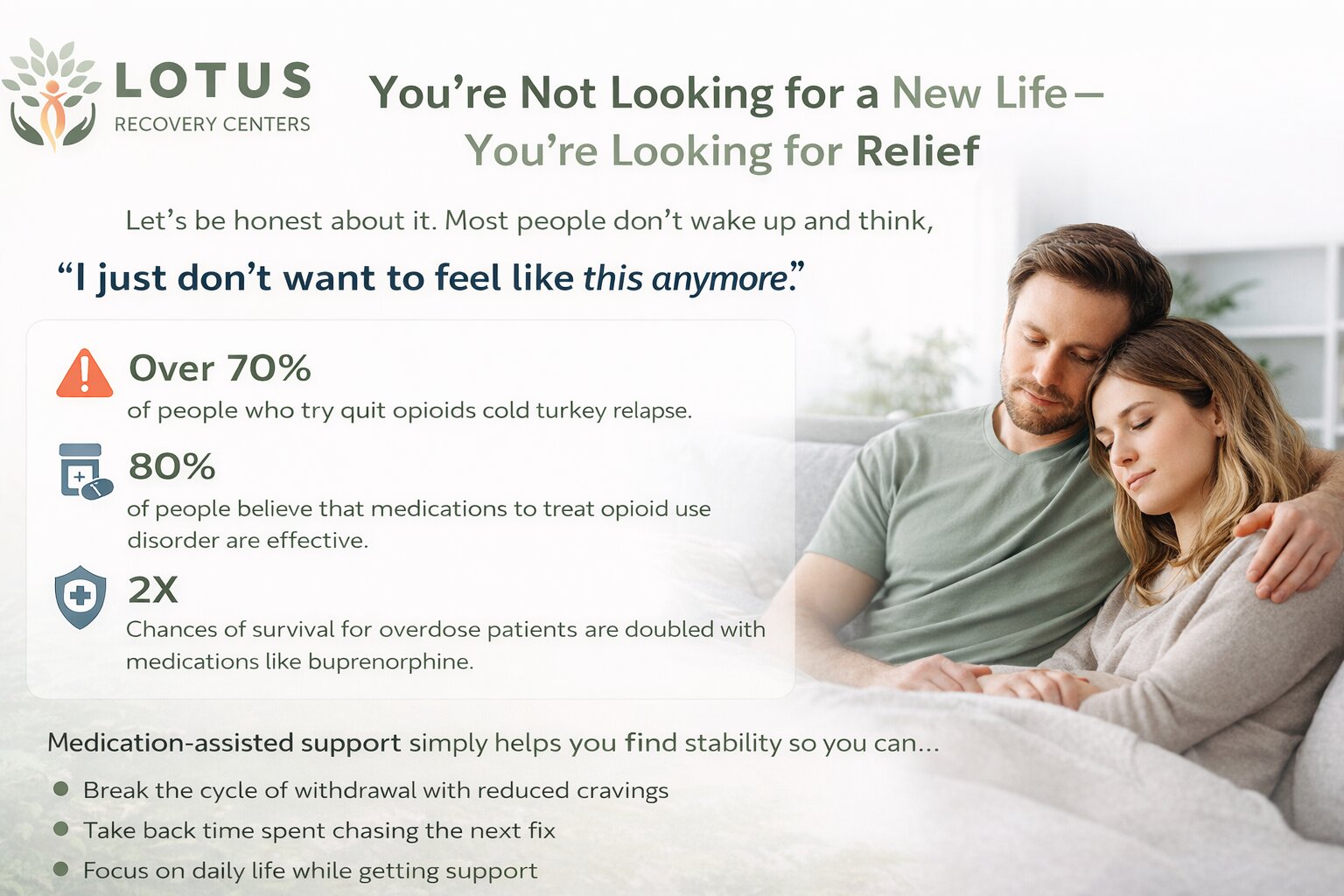
You’re Not Looking for a New Life—You’re Looking for Relief
Let’s be honest about it.
Most people don’t wake up and think, “I’m ready to become a completely different person.”
It’s more like:
“I just don’t want to feel like this anymore.”
That’s it.
The shaking. The anxiety. The clock-watching. The way everything revolves around avoiding that next wave of withdrawal.
If you’ve ever tried to stop opioid withdrawal at home, you already know how brutal that can be. It’s not just uncomfortable—it can feel impossible to push through on your own.
So no, you’re not chasing some big transformation.
You’re just trying to get your footing back.
The Fear Isn’t About Sobriety—It’s About Losing Yourself
Here’s the part people don’t say out loud:
“What if I get help… and I don’t recognize who I am anymore?”
Because right now, even in the chaos, there are parts of you that feel familiar.
The way you think.
The way you connect.
The way you move through the world.
And there’s a real fear that getting support—especially with medication—might flatten that. Mute it. Take away whatever makes you you.
I had that fear too.
What It Actually Feels Like (From Someone Who’s Been There)
It’s not what I expected.
I thought I’d feel numb.
Disconnected.
Like someone had turned the lights down inside me.
But it wasn’t like that.
It felt more like… the static quieted.
Not silence. Just less noise.
The constant pull in my body eased up enough for me to think clearly again. I didn’t feel high. I didn’t feel dulled.
I just felt… available.
Available to my own thoughts. My own emotions. My own life.
You Don’t Lose Yourself—You Lose the Constant Interruption
This is the part that’s hard to explain until you feel it.
Substances don’t just add something—they interrupt something.
They interrupt your ability to sit still in your own mind.
They interrupt your natural rhythm.
They interrupt your sense of self, even while convincing you they’re helping.
When that interruption starts to fade, something else comes back online.
Not a new version of you.
Just you—without the constant interference.
It’s Not About Perfection. It’s About Breathing Room.
Nobody walks into this and suddenly has everything figured out.
There are still hard days. Still emotions that come up. Still moments where you question everything.
But there’s space.
Space between feeling and reacting.
Space between discomfort and needing to escape it.
Space to choose something different.
That space changes everything.
You Can Move Toward This Without Doing It Alone
Trying to figure this out on your own can feel like the only option.
A lot of people think they should be able to push through it privately. Handle it themselves. Tough it out.
But the truth is—this isn’t something you have to white-knuckle.
If you’re looking for support in Delaware, there are people who understand exactly what this stage feels like. Not just the surface of it—but the part where you’re tired of the cycle but still unsure what comes next.
You don’t have to jump all the way in.
You just have to stop doing it completely alone.
The Version of You You’re Afraid to Lose Is Still There
That version of you?
The one who:
- Thinks in a way that feels sharp and alive
- Feels things deeply, even if it’s overwhelming
- Has a personality you don’t want to lose
They’re not going anywhere.
If anything, they’ve been buried under everything it takes to keep the cycle going.
This isn’t about becoming someone else.
It’s about getting back to someone you haven’t fully been able to access in a while.
You don’t have to trade your identity for relief. You don’t have to disappear to get better.
Call (833)922-1615 or visit our medication assisted treatment mat services in Wilmington, DE to learn more about our programs.